Mojo Monday ~ Enjoy Every Sandwich

As medical director of the famed Preventive Medicine Research Institute, Lee Lipsenthal helped thousands of patients struggling with disease to overcome their fears of pain and death and to embrace a more joyful way of living. In his own life, happily married and the proud father of two remarkable children, Lee was similarly committed to living his life fully and gratefully each day.

The power of those beliefs was tested in July 2009, when Lee was diagnosed with esophageal cancer. As Lee and his wife, Kathy, navigated his diagnosis, illness, and treatment, he discovered that he did not fear death, and that even as he was facing his own mortality, he felt more fully alive than ever before. In the bestselling tradition of Tuesdays with Morrie, told with humor and heart, and deeply inspiring, Enjoy Every Sandwich distills everything Lee learned about how we find meaning, purpose, and peace in our lives.


Here are excerpts from Chapter 18 called Living and Dying Outside the Box.

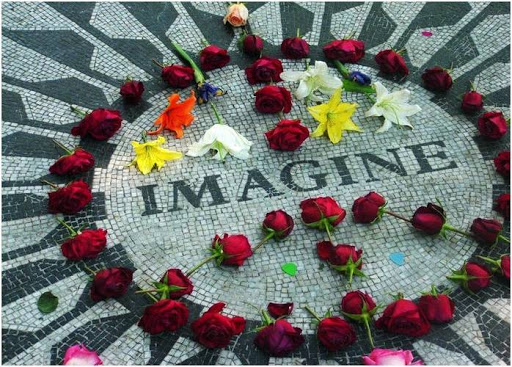
“We create the world we live in.  Some of us have large comfortable homes with room to grow, and others have tiny, boxlike apartments that keep us feeling small and confined.  When I was younger, I lived in a Neuroimaginal box of depression and anxiety where smart people became doctors or lawyers and relationships were like those idealized stories presented to me daily on television and in movies:  Good people get good things, love is pure an romantic, and bad guys always get it in the end.  At that time, I believed that was all there was to life.  I had no way of seeing outside that limited worldview.  it was my truth.

When I lived in such a small box, I couldn’t imagine any other world or life.  I reinforced my limited world over and over by surrounding myself with people who shared my views, passions, and opinions.  I defined myself by the world I had created. 

I had no desire to leave the little box I lived in, because there was enough comfort, security, and success for me to believe that everything was fine.  I came up with justifications for why I couldn’t change.  I had responsibilities to my wife and kids, to my work.  I had invested so many years to build this life and career that the fear of change was greater than my desire to change.  Maintaining the status quo was just enough to get by, and I told myself good stories of a successful life to avoid thinking about change.  I had solid defense mechanisms.  

I was a physician with a wife, children, and a thriving practice.  Everything was supposed to be great, but a restlessness began to grow inside me. This restlessness became anxiety and dissatisfaction, and although I wouldn’t have used this terminology then, my soul began to call out to me for what it needed: a new self, a new world, something larger.  My desire to change began to exceed my fear of change.

I started to explore other options and ask other people about their experiences.  People around me who had changed their worlds told me, ‘Oh, it’s easy; I did it.  And look how happy I am now.  All you need to do is…’ I thought that they just didn’t understand how hard change would be for me.  I was a successful doctor.  They hadn’t lived my life; they weren’t me.

In retrospect, these people had made substantial changes in their lives, but in doing so they forgot what it was like to be stuck in a world of limitations.  For them, changing their world seemed so easy, a no-brainer, and of such great value that they wouldn’t have it any other way.”


“Birthing a new life, scratching your way our of a confining box, is very much the same; the freedom and expansiveness at the other end make you forget how traumatic and difficult the work of escaping was.  Today I can’t imagine living my old life, but I can say that leaving it behind was not easy.  I have not forgotten totally the pain of delivery.

But pain always seems to push us until vision starts to pull us. In my thirties, the pain of living in my depressed and anxious little box finally surpasses my desire for safety, and I began to scratch away at the lining of the box in which I was stuck.  For years, I didn’t even know where I was going.  I just knew that my old world wasn’t enough.  I scratched away at that box with simple tools: meditation, exercise, rock’n’roll, love, and therapy.  I had no idea what I would find outside the walls of that box.  I only knew that it was too painful to live inside it anymore.  I was living the life I was supposed to live, but my soul was withering.  

So I scratched away each morning, each evening, and each and every day until a small streak of light started to shine through.  The wall had become just thin enough for me to know that there was something outside this prison of my own making.  After I could see that small glimmer of hope, the effort started to feel worthwhile and change became possible.  Inspired, I scratched some more.

After years of scratching, struggle, introspections, and disruption in relationships, the thin opening in my small box became wide enough for me to step out.  What I found was scary, unknown place where all my old emotions and thoughts lived but where they were now accompanied by a new worldview in which thoughts and emotions were just of the moment, not the definition of myself.

This new world I had entered, this new home, was a place of transcendence, anger, depression, and joy , and I had to deal with it all.  There was no shield expect love.  Somehow, without being aware of it, I had created a new home for myself.  It was a safe place both to grow in and from which to venture out into the risky unknown.  From this new home, life became and adventure in which difficulty was just something to dive into. Every time I did dive in, I came out stronger than before.  I came out refreshed and renewed. 
This new house of my own creation has changed and now has many rooms.  I have built it over many years with my practices of meditation, prayer, therapy, and journeywork, and it continues to expand.

This home has a room called depression where I can sit after struggling to walk up our small hill because my postradiation lungs are burned, coarse remnants of the pink, healthy tissue they once were.  In this room I sit and listen to Jackson Browne’s ‘Late for the Sky’ and acknowledge what I’ve lost. 

This house has a room called anger where the frenetic energy of punk rock pushes me to flail about until I collapse, usually of exhaustion, expunging anger at those who have hurt me.

This house has a room called joy, where Patti Smith’s ‘People Have the Power’ is cranked up to eleven on the volume dial, where I laugh, jump, and let tears of pure happiness flow.

This house has a room called love where ‘God Only Knows’ by the Beach Boys plays 24/7 and where I sit and feel the petals of gratitude in my pocket.

This house has a room where my family dances together to Johnny Clegg’s ‘Cruel, Crazy, Beautiful World’ and I hold my daughter while hearing Joseph Arthur’s ‘In the Sun.’

This house has a room called peace where I meditate and Tibetan bowls ring in their sweet, harmonious tones and overtones, incense burns, and the world of today disappears in the silence of all that is bigger than me.

This house has a room called busy-ness, where a playlist of Springsteen, the Stones, the Beatles, John Prine, the Replacements, NRBQ, and many others are my welcome sound track to a life of doing.

This house has a kitchen where my friends and family gather and create warmth.  My dad sings Sinatra as we make sandwiches together — many breads, many fillings, much love.

This house has a room called death where some day –maybe this year, maybe in five years, maybe when I am seventy-eight — I will go to lie down and this body will stop and some version of ‘I’ will rest at last.  But the music will play on.

I built this house with practice, experience, and love.  It took years of work. It didn’t exist before me, and it may not be there once I cease to be.

You too can build a house of your choosing.  Like any labor of love, it takes time, patience, and practice.  Even if you only have time left to redecorate one room in your existing house, it’s worth the effort.

If you are confined inside four small walls, it is impossible to see what lies outside.  When you are inside a box of pain, scratch away at the walls.  When you are inside a box of depression, scratch away.  A box of perfectionism, scratch away.  A box of self-pit, scratch away at those walls as if your life depended on it.  Because it does. You won’t know where you are going, or how to get there, or what it will look like on the other side.  But if there is pain or worry or unhappiness, scratch away at the walls that imprison you–scratch away with prayer, meditations, yoga, exercise, laughter, art, movement, gratitude, acceptance, and love.  Scratch away with the knowledge that there is so much more to life that what we imagine it to be.  There is so much more to death than what we imagine it to be.  And there is so much more to living and loving and being than can be seen from inside our little walled-in world.”

“We all have this capacity, we can all learn the necessary tools, and we all have God or Spirit and the shaman within us.  We just need to begin to practice, to scratch away at the old Neurimaginal world we have created and build ourselves a new home. 

Patti Smith was right.  People do have the power.

Facing my mortality, chemotherapy, radiation, and especially the inability to help those whom I love has made this the most challenging period of my life so far, but simultaneously, I have felt more gratitude and more freedom and peace and life than ever before.  

Someday you will face your own mortality.  At that moment, I hope you see that your life has been well led, that you hold no regrets, and that you have loved well.  On that day, I hope that for you, it has become a good day to die.”


Questions to ponder and maybe answer

1) Author Lee Lipsenthal states “We create the world we live in.”  What are your thoughts on this statement?  Are you satisfied, content, happy in your current world?  If not, what changes do you want to make to it?

2) If you are living in the world you want and envisioned what took place to get there?  Was the journey difficult or easy?  

3) Lee describes his new life in terms of building a new home.  He then goes into detail about all the different rooms and because music plays an important role in his life he even shares the soundtracks that play in these rooms.  Consider the various rooms he names: depression, anger, joy, love, peace, busy-ness and death. He also mentions a room where he and his family dance and of course the kitchen, where family and friends gather.  Think about your own life and how you would describe the rooms of your home.  Which rooms already exist?  Which rooms might you add on?  If you are a music lover what songs would be playing in your rooms?  

4) On a deeper level what did you take from that whole section about rooms?  


Lee Lipsenthal, MD, ABIHM, was an internist, trained in the prevention of heart disease and in integrative medicine. A popular and acclaimed speaker and author, he was the medical director of Dean Ornish’s Preventive Medicine Research Institute for a decade and has also served as president of the American Board of Integrative Holistic Medicine.  Lee died September 20, 2011, just months before his book was published.  He and his family had grow hopeful over the course of two years that he had overcome the aggressive esophageal cancer.  Yet when he learned it had returned the prognosis was that he had only six to eight months to live.  

In August of 2011, shortly before his death, he wrote an article for the Huffington Post called Dying Awake.  Here is an excerpt:

“It may seem peculiar that I am calm while others in my life are suffering. I can assure you their suffering makes me sad; I wish this weren’t happening. Yet after almost 30 years of meditating, I have learned to embrace optimism, gratitude and the knowledge that I am not in control over my life or death. Instead of being mad at the hand of fate, I am focused on what is going on — mentally, physically, and emotionally — with myself and those that I love. In spiritual language, I am awake. 

I have no bucket list of things to do. I have been living my bucket list for some time now, and when I was first diagnosed, it came to me that the real list in my life was not the places I wanted to see, but the list of friends in my life with whom I want to spend my time.”


Here is one last piece by Lee on “Living Fully” as it appeared in his article The Noetic Change Model – Living  Life of Meaning 

Living Fully
Living fully is having an ongoing transcendent experience.
It is not studying and analyzing the experience.
It is not wanting more of the experience.
It is not buying the right clothing to remind you of the experience.
It is not telling the world that you are the experience.
It is being within the experience.
It is asking “How does this experience inform my life?”
It is asking “How does this experience help me to serve others?”
It is doing the work of love without being seen.

Mojo Monday ~ Change and Empowerment


Change.  It is in the air.   

It could be seeing the first green shoots of the daffodils poking up through the soil.  
It might have been the powerful university presentation given by an animal activist that I watched last weekend, calling for people to become aware of the cruelty that is being inflicted on living and breathing animals every single day.  

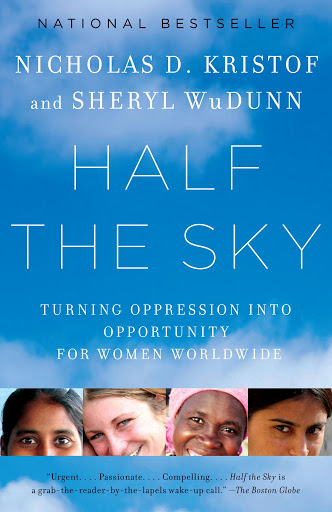
Then again, it could have been the documentary Half the Sky that I also watched last weekend.  A documentary based on the book Half the Sky: Turning Oppression into Opportunity for Women Worldwide by husband and wife journalists, Nicholas Kristof and Sheryl WuDunn.  Both are New York Time reporters and Pulitzer Prize winners. Their efforts bring to light the very real lives and plight of women and girls in countries like Cambodia, Vietnam, Sierra Leone, India, Kenya, and Somaliland.  While the stories might often include very difficult issues like rape, violence, sex trafficking, slavery, abuse, genital mutilation and so on, both Nicholas and Sheryl find those who are working to change these things.  They look for the stories that while sometimes hard to hear, can also be incredibly inspiring when one witnesses that there are those determined to change things for the better.


There are also all the inauguration events this weekend happening in our country’s capitol.  A President who won his first election based on a platform promising change will again take his presidential vows.  Along with being aware of this Saturday being a National Day of Service, there is also the remembrance of Martin Luther King, Jr., a man who will remembered in history as a remarkable agent of change.  
I know that my own heart can grow heavy when I hear of things like sex trafficking, senseless gun violence, horrific rapes and violence, abuse and neglect of children and the list goes on.  As a person who has an affinity for animals and who made the decision to eat vegan almost 5 years ago, I also feel for animals that are treated with unnecessary cruelty.  

Just the other day I also watched the trailer for the film Vanishing of the Bees, which is narrated by youthful actress Ellen Page.  Talk about a disturbing situation that could have dire consequences for the planet.  This of course leads to environmental concerns, global warming, genetically modified foods and the list goes on and on.  
Have you ever felt overwhelmed by it all?  

I know I have on many occasions.  

I think it is common to hear of these issues in the world and for some of us there is a desire to want to help to change things for the better.  We want to know how can we help?  How can we make a difference?

I also think that too often we really don’t know what we can do to help and we end up feeling helpless.  We might be unsure of how our abilities and skills could be put to use.  

The solution might be simpler than we imagine.  Consider this quote by inspirational Aung San Suu Kyi, “When you feel helpless, help someone.”  

The answer might be for us to simplify things at first.  The first step might be to take a look at our current life and identify what changes we could make in our own lives first that would empower us to more capably serve and help others.  

The first set of questions to ask are: What is your relationship with yourself?  Do you feel good?  Are you healthy?  Do you feel at peace within your own person?  Are there any issues going on with you that need to be addressed first?  Are there any addictions or unhealthy habits that have been adopted that you must face?  Are there wounds, even childhood ones, that need to be dealt with and hopefully healed for you to become your most empowered self?  Would counseling or therapy be a course of action to help you work through things?  

Perhaps leaning into one’s spiritual or religious practice is what one needs to get centered.  It might include a meditation practice, journal writing, creative expression, painting, writing prose or poetry, sculpting, or dancing.  All of these things that let you get in touch with your soul and that give you joy and instill in you a love of life, are those things that can increase your confidence and that feeling of empowerment needed to move your thoughts and wishes, and those desires to effect change, into action.  

Questions regarding where you are at on the spectrum of physical, mental and emotional wellness aren’t intended to make anyone feel less capable of helping others or making a difference in the world.  Yet when we are coming from a place of being centered and whole in ourselves that shines through.  How we are with ourselves, how we treat ourselves, affects how we in turn treat others, and is one of the most significant things we model in this world.  It it the thing that most influences our children and those who are in regular contact with us.  

Again as we return to the idea of keeping things simple.  When you consider all the ways there are and might be to make a difference and create change in the world, what is the first thing that comes to mind?   

Often the first thing that comes to mind is the thing that truly resonates with your inner spirit.  This might be something that will put into motion your sense of purpose or a feeling that you have a calling.  

Not everyone’s journey is going to include starting a non-profit to build schools for girls in Vietnam, a safe house in Cambodia for girls or a hospital in Africa.  The journey may involve volunteering at the local food shelter or animal shelter.  The journey might be a mom and dad raising their children to be compassionate, caring, kind and loving.  The journey might be lead a group of veterans with PTSD through a therapeutic drumming and painting playshop.  The journey might be to start a local meditation group.  The journey might be to use cloth bags at the grocery store, instead of plastic.  The journey might be to run for city council, mayor, the senate or even president.  The journey might be to write poetry.   The journey might be to take thought provoking photographs and share them with the world, as is the case with JR from France who shares his journey through a TED talk which you can watch here.  The journey might be calling, writing to and petitioning one’s civic leaders to make changes to gun laws.  The journey might be leading workshops, counseling others, or writing articles and books that inspire others to be their best selves,  who in turn do the same for others on their journey.  

Do you have an inkling right now of what your journey might be?

This can be both a deep and yet also freeing question to ponder.  Imagine that you have been agonizing over finding our big purpose on this planet and you suddenly realize your journey in giving back to others is through writing poetry, something that you love to do.  Or that your great gift to others is through how you love to cook and feed people really good food.  It could be that you have a gift for connecting people with other people and your role as a networker is so very valuable in bringing people together.

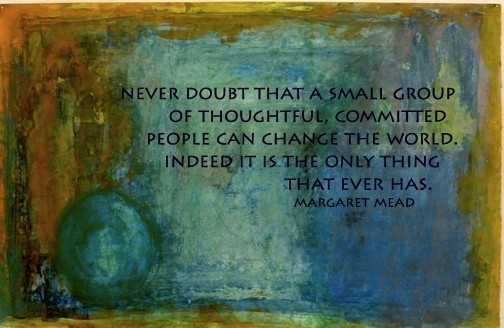
There are many ways one can make a difference.  None of us have to do it all.  None of us can do it all.  All we can do is our own part.  My wish is for us all to simply do our little part to make this a more compassionate, kind, caring and loving world.  As Margaret Mead once said, “Never doubt that a small group of thoughtful, committed people can change the world. Indeed it is the only thing that ever has.”


Want to know of ways you can take action in connection with the Half the Sky movement?  Visit this website to find out the many ways one can contribute ~ donate, volunteer, buy for good, advocate, become a campus ambassador, become a community ambassador, host or find a screening of Half the Sky, or share your story: 
http://www.halftheskymovement.org/pages/act


Here is a short video featuring actress America Ferrera as she talks about her participation in the Half the Sky documentary and her experience in India. 


Mojo Monday ~ Breathe


Meditation Poem (On breathing) 
From The Heart of the Buddha’s Teaching, by Thich Nhat Hanh


The fourth element of our body is air. The best way to experience the air element is 
the practice of mindful breathing. “Breathing in, I know I am breathing in. 
Breathing out, I know I am breathing out.” After saying these sentences we can 
abbreviate them by saying “In” as we breathe in and “Out” as we breathe out. We 
don’t try to control our breathing. Whether our in-breath is long or short, deep or 
shallow, we just breathe naturally and shine the light of mindfulness on it. When we 
do this we notice that, in fact, our breathing does become slower and deeper 
naturally. “Breathing in, my in-breath has become deep. Breathing out, my outbreath has become slow.” Now we can practice, “Deep/slow.” We don’t have to 
make an extra effort. It just becomes deeper and slower by itself, and we recognize 
that.

Later on, you will notice that you have become calmer and more at ease. “Breathing 
in, I feel calm. Breathing out, I feel at ease. I am not struggling anymore. 
Calm/ease.” And then, “Breathing in, I smile. Breathing out, I release all my 
worries and anxieties. Smile/release.” We are able to smile to ourselves and release 
all our worries. There are more than three hundred muscles in our face, and when 
we know how to breathe in and smile, these muscles can relax. This is “mouth 
yoga.” We smile and are able to release all our feelings and emotions. The last 
practice is, “Breathing in, I dwell deeply in the present moment. Breathing out, I 
know this is a wonderful moment. Present moment/wonderful moment.” Nothing is 
more precious than being in the present moment fully alive and aware.

“In, out 
Deep, slow 
Calm, ease 
Smile, release 
Present moment, wonderful moment.

If you use this poem during sitting or walking meditation, it can be very nourishing 
and healing. Practice each line for as long as you wish.

Another practice to help us be aware of our breathing is counting. As you breathe 
in, count “one” and as you breathe out, count “one” again. Then “Two/two,” 
“Three/three,” until you arrive at ten. After that, go back in the other direction: 
“Ten/ten,” “Nine/nine,” and so on, until you arrive back at one. If you do get lost go 
back to “one” and begin again. Relax. It’s only a game. When you succeed in 
counting, you can drop the numbers if you like and just say “in” and “out.” 
Conscious breathing is a joy.” 

Mojo Monday ~ The Beauty In Making Mistakes

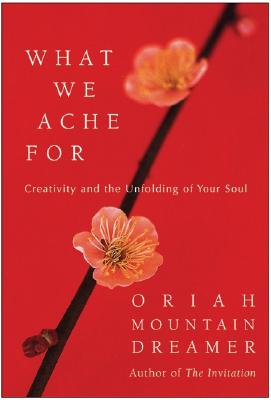
If you are familiar with author Oriah Mountain Dreamer you might be surprised to learn that once upon a time she doubted if she would ever become a published writer.  This is the woman who wrote the piece called The Invitation, that later became a book by the same title.  Oriah shares in her book What We Ache For: Creativity and the Unfolding of Your Soul the story of attending a writing workshop, and how after having her writing torn to pieces over the course of several days, and hearing how few people will ever succeed at writing, left the workshop feeling deflated and almost convinced she should throw in the towel.  Yet writing called to her soul and she picked herself back up and continued to follow that calling.  

It was her determination and an internal pull to continue to write that propelled her forward.    She explains in her book What We Ache For how a writer will write, a dancer will dance, an artist will paint or sculpt, the musician will make compose, the photographer will take photos and so on.  They will do these things over and over again.  Here is how she expands on the subject:

“Sometimes we use the same stories and images, sounds and movements.  Sometimes we work on the same themes using different stories and images, sounds and movements.  Sometimes we create the unexpected and never repeated.  Sometimes we create between interviews and publicity tours.  More often we create between dental appointments and taking our children to hockey practice.  But we do our creative work.  It’s how we learn how to do the creative work.  And sometimes we become tired and discouraged. Sometimes we do not want to see the same image  emerge on the canvas, find the same theme surface in the story we are writing.  Sometimes we are afraid we will never be able to write or paint or compose or dance or film the wholeness or beauty or truth we ache to produce.  And in these moments we take ourselves out into the world and let our sexuality, our love of the sensual beauty of this physical life, and our spirituality, our experiences of the truth we ache for, find us and rekindle our passion to create.  We let the dance between the world and our imaginations move us.  And we begin again, painting or writing or composing moving or photographing or filming.  It’s how we dip down into that well of creative potential and weave a story or create an image or find just a single phrase of melody that takes the breath away. It’s how we pray, how we participate in in life.  Over and over again.”

Oriah also recounts a great story about John Cougar Mellencamp.  She shares how she heard him being interviewed on the radio and described what she heard this way:

“Mellencamp said that people generally fail in creative endeavors because they assume that great artists produce great works of art from the moment they begin.  He postulated that for every masterpiece Renoir produced he has painted dozens if not hundreds of paintings that were just not very good.  As a composer, Mellencamp had realized that he had to be willing to compose literally thousands of bad songs, songs that were hardly worth singing and certainly not worth recording, if he wanted to write one great song.  Mellencamp pointed out that when an artist puts his or her work out into the world it appears to emerge fully formed.  Those who received the completed work, the piece deemed worthy of sharing, hav eno idea how long a process was involved, how many previous incarnations hit the trash can or were painted or recorded over.”

Oriah shares that we have to be willing to keep at it, to learn from the doing.  If we want to learn how to write or paint or do any form of creative work, we have to be willing to do it over and over and over again, even if the results are not what we want.  Oriah shares how she was at first horrified when a respected writer advised her at workshop to lower her standards.  She shares that while for a perfectionist this is tough, it is necessary advice, because “Nothing stops the creative flow and obstructs the only path to learning to create – repeated trial and error – like being wedded to doing it perfectly…and nothing frees up the flow, opens the door to the learning that can come only with repeated experience, like lowering your standards, giving yourself permission to write the worst possible drivel that has ever hit the page.”

Lastly Oriah also shares this piece of wisdom that was told to her years ago in a dream.  An old man who she had seen in her dreams for many years smiled and said to her, “Do not confuse what you do with who you are, Oriah.  You are not a writer, although you may at times write.  You are life unfolding in human form, an awareness within which writing, along with many other things –eating, sleeping, making love, walking in the sun, feeling sad or glad –arise.  There is no writer, only writing.”  She says that this dream led her to this revelation:

“This idea frees us from the sometimes oppressive notion that we make the creative work happen.  The human neurological system and awareness is but one of the places where creative work arise and through which it happens.  Thinking of it this way, we can let the creative work be whatever it is.  We can arrive at our desks or studios, our journals or easels or keyboards or cameras, excited to see what might happen and content to let it be what it is, to repeat the process over and over.  This perspective can keep us from viewing creative work as a means to an end, as something with a hope-for outcome, and help us see it rather as an end in itself.”  


Here are some questions to consider:

Today I am will to do __________________________ badly.

Today I will lower my standards in how I….

I do ______________ badly, but I do it because….


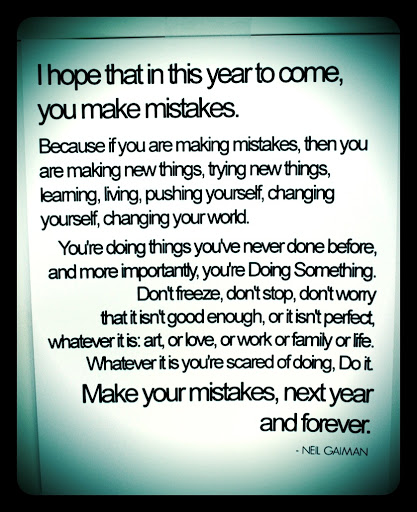
Prior to beginning this post I decided I would create a 2013 word art piece.  I committed to just whipping it out and then posting it, no matter what I thought of it when I finished.  I toast to us all trying new things, making mistakes, creating for the sake of creating, accepting imperfection, loving the process and the journey, rather than just the end products.

My words for 2013 are Wonder, Wow, Love, Health, Grace, Peace, Breath, Action, Courage and Mystery.

What words might you want to claim and hold close this year?

Mojo Monday ~ Promise of Tomorrow

Courage doesn’t always roar
sometimes courage is the quiet voice 
at the end of the day saying,
“I will try again tomorrow.”
~ Mary Anne Radmacher

This has been one of my favorite quotes for many years.  Artist and writer Mary Anne Radmacher has inspired me for many years with her writing and her art.  Many of her books are included in my library of favorites.  Yet it is only recently that I picked up a copy of her book called Courage Doesn’t Always Roar.   I was incredibly moved and thrilled to read an expanded version of this very quote in this book.  I felt a bit stunned after taking it all in.

I also definitely appreciated this particular part in the introduction, 

“Courage is a paradox.  
Courage is the willingness to aspire, reach, 
and again believe in the promise of tomorrow.”

Hmmm…let those words linger promise of tomorrow.

Now let us journey together further into the exploration of courage with Mary Anne Radmacher….

Courage doesn’t always roar
sometimes courage is the quiet voice 
at the end of the day saying,
“I will try again tomorrow.”

It takes courage

to change your style,
your opinion,
the path you walk…
your hat!

It takes courage to let go
of the weighty parts of your past.

It takes courage
to find your own voice.

It takes courage
to reinvent joys,
to reinvent opportunities,
to reinvent dreams,
to reinvent connections…

to reinvent hopes
that you have set aside.

It takes courage
to recognize that rigid habit inhibits.

It takes courage to accept
that the way you “have always been”
does not determine the way you are.

It takes courage

to stand in a place
you didn’t know existed…
and learn from a view
you previously couldn’t imagine.

It takes courage to let go
of your assumptions
and fly your dreams as a 
soaring invitation to become
the best version of yourself.

It takes courage to stand for your convictions.
It takes courage to give up control.
And it takes courage to recognize you are perfect
just the way you are.

Change of any sort, requires courage…
Courage to write a new story of your life
with the pen of each day
…of every moment.

Tell yourself this little story when you need it – 

“I have the courage to stand
in whatever the weather brings…
and understand that everything is washable.
Everything is fixable,
and everything is replaceable
but my time and breath.”

The opportunity for greater courage
comes in the most ordinary moments.

Courage sings the praises
of the sturdy souls and says to them,
“Today I will borrow a little of your courage
and see what garden I can water 
with the healing of my tears;

and what growing things I can nurture

with the strength of my laughter.”

Courage is defined more by its contrasts 
than it sameness,
more by its risks
than its security.

Courage is content to make no excuses.

Courage, dressed in intentional change,
is the most ferocious response to fear.

Courage acts without regret.
Courage laughs right out loud.

Have the courage 
to walk out the door
and let possibilities discover you.

Have the courage 
to wander and parades will find you.

Courage.

As you weigh the many possibilities of your day

measure your action with this question,
“How would I most like to remember this?”

Your chosen answer becomes
your natural action and
your unique opportunity 
for courage.

Perspective in the large.

Grace in the small.

An open hand.

A practiced pause.

A YES!

Courage doesn’t always roar.

Mary Anne Radmacher has touched the hearts of tens and thousands with her popular cards, books, posters, journals, and gift books.  She conducts workshops and writing seminars on living a full, creative, and balanced life. 

She is the author of the following books:
Lean Forward into Your Life
Us: Celebrating the Power of Friendship
May You Walls Know Joy
Courage Doesn’t Always Roar
Live with Intention
Live Boldly

Please visit her website: http://www.maryanneradmacher.net/


A new year is approaching.  

2013 will be here within a week.  

Surrender your fear.

Embrace change.

Center yourself.

Stay true to your voice.

What is it that you want in 2013?

Now is also a great time to write yourself a series of Permission Slips!  Be courageous.  Set yourself free to be you ~ and to do those things that make you happy…and then let the rest be.

 You can just let it be.

I looked back at a list of Permission Slips that I had written for myself as part of a Cosmic Cowgirl Sparking session.  I have the date down as December 22nd.  I was inspired again by what I had listed.  Here is that list:
I give myself permission to be different than I was 10 years ago.
I give myself permission to like and love who Michelle is today.
I give myself permission to not be perfect.
I give myself permission to love my imperfect and over-sized body.
I give myself permission to be content.
I give myself permission to be an imperfect parent and partner.
I give myself permission to lighten up.
I give myself permission to not get it all done.
I give myself permission to write without editing.
I give myself permission to relax and have fun.
I give myself permission to make mistakes AND NOT beat myself up about them.

What would you include on your Permission Slip list?


Mojo Monday ~ When I Grow Up


When I grow up…I want to be a sheep racer, probably said no one, ever. Yet in the photo above, just look at the joy on those little girl’s faces as they race away.  Of course, my animal loving nature does have me hoping that the sheep were having just as much fun.

Can you recall as a child what you wanted to “be” when you grew up?

Quite often when you ask a child this question the response has to do with the type of job they imagine having when they are an adult, and in their limited exposure to vocations, it is often things like astronaut, fireman, teacher, actor, singer and so on.  

As we grow up, discover more about ourselves, our likes and dislikes, our preferences, our strengths and weaknesses, we are usually still being directed by our parents, our teachers, and other mentors, to figure out what we want to do for a living.  As we grow up we learn about other job possibilities and most often the statement “When I grow up” still ends in some kind of declaration regarding a career or how we think we might make a living.  

Have any of you said, or heard a child say “When I grow up I want to be happy.”?

Or how about “When I grow up I want to be whole-hearted.” or “When I grow up I want to be philanthropic.” or “When I grow up I want to be compassionate and full of grace.”?

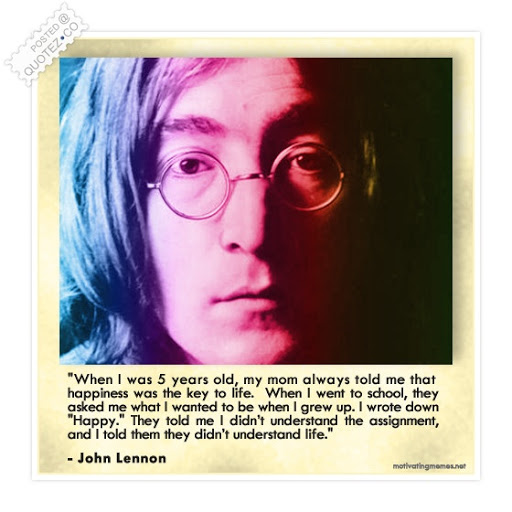
I love the quote by John Lennon featured above, “When I was 5 years old, my mom always told me that happiness was the key to life.  When I went to school, they asked me what I wanted to be when I grew up.  I wrote down ‘Happy.’  They told me I didn’t understand the assignment, and I told them they didn’t understand life.”

What I’ve realized in my advancing years is that while there isn’t anything wrong with figuring out what we want to do, however it doesn’t capture the whole picture or touch upon some of the more important aspects of our life journey, such as the lives we touch, the care we show for others, and the love we infuse into the lives of others.

Some people eventually figure out what makes their spirit soar and it may end of coinciding with what they do for a living.  If not, hopefully they will still find how they earn their check to be somewhat fulfilling, and in their off time they will pursue their deeper soul stirrings.  

For those still trying to figure things out, be it how to be really happy or what kind of career to pursue, recapturing the playful spirit of a child can be helpful in exploring the possibilities. In this day and age is it rare for people to stick with one career.  In fact if they are to really seek out those things that bring them joy, contentment and inner peace, they may change direction several times in their lifetime.  

Consider role playing, trying on different hats so to speak, just for fun.  

Ask yourself the question “If I could do anything I would…”


Consider this fun list in the photo to the left for inspiration.

What about becoming a rock star, cowgirl, tap dancer, gypsy, star gazer, fairy godmother, cupcake spinkler, or even wonder woman?

Now while none of these may be a way to make a living, simply pretending or trying on a new persona, could make living a lot more creative and fun.  

Consider the possibilities of what you could be when you are grown up….because whether you are 24, 34, 44, 54, 64 or 104, you still have room to grow.

Mojo Monday ~ The Story of Time

Purely Pacific Northwest from John Eklund

“The Milky Way drifts across the sky. Aurora tumble and roll. 
Clouds flow like rivers or undulate like smoke.”

This video is photographer Oregon-based John Eklund’s time-lapse depiction of the Pacific Northwest.  John has this to say about his work, “I choose to shoot locations that appeal to the way I would like to interpret the story of time.”  “Here is the Pacific Northwest, there are endless opportunities to depict the magnificence of the world around us.  I have discovered that when time is the storyteller, a special kind of truth emerges.”  
The video Purely Pacific Northwest is composed of 260,000 shots John took of Mt. Shuksan, Crater Lake, Mt. Bachelor, Mount St. Helens, Oregon’s Badlands, Painted Hills, Cape Kiwanda, Mt. Hood, Lost Lake and Cannon Beach between July 2011 and August 2012.
I am in awe of this video.  There is something about nature, our planet, the stars, the cosmos above, that leave me with a sense of wonder and wow, but also a greater sense of peace.  It reminds me that we are all a part of something so much bigger and greater than ourselves.  It also gives me a comforting reminder of the way we are all connected on this planet.  

Connecting with the beauty of nature has always been a grounding touchstone for me.   Is the same true for you?     


Consider getting out, taking your camera and going for a walk in your neighborhood or a nearby park or if you have more time on your hands, take a little drive and go exploring to find some fall color.  Perhaps your adventure might even call for a hike in the mountains.  

Come back and share photos after your outing.  

Do they tell a story?  

How did you feel during the outing?  
Here is a photo slideshow from the world of nature my family and I have been enjoying the last few days in beautiful Northern California.  

Click to play this Smilebox slideshow
Create your own slideshow - Powered by Smilebox
Slideshow design generated with Smilebox