Mojo Monday ~ Promise of Tomorrow

Courage doesn’t always roar
sometimes courage is the quiet voice 
at the end of the day saying,
“I will try again tomorrow.”
~ Mary Anne Radmacher

This has been one of my favorite quotes for many years.  Artist and writer Mary Anne Radmacher has inspired me for many years with her writing and her art.  Many of her books are included in my library of favorites.  Yet it is only recently that I picked up a copy of her book called Courage Doesn’t Always Roar.   I was incredibly moved and thrilled to read an expanded version of this very quote in this book.  I felt a bit stunned after taking it all in.

I also definitely appreciated this particular part in the introduction, 

“Courage is a paradox.  
Courage is the willingness to aspire, reach, 
and again believe in the promise of tomorrow.”

Hmmm…let those words linger promise of tomorrow.

Now let us journey together further into the exploration of courage with Mary Anne Radmacher….

Courage doesn’t always roar
sometimes courage is the quiet voice 
at the end of the day saying,
“I will try again tomorrow.”

It takes courage

to change your style,
your opinion,
the path you walk…
your hat!

It takes courage to let go
of the weighty parts of your past.

It takes courage
to find your own voice.

It takes courage
to reinvent joys,
to reinvent opportunities,
to reinvent dreams,
to reinvent connections…

to reinvent hopes
that you have set aside.

It takes courage
to recognize that rigid habit inhibits.

It takes courage to accept
that the way you “have always been”
does not determine the way you are.

It takes courage

to stand in a place
you didn’t know existed…
and learn from a view
you previously couldn’t imagine.

It takes courage to let go
of your assumptions
and fly your dreams as a 
soaring invitation to become
the best version of yourself.

It takes courage to stand for your convictions.
It takes courage to give up control.
And it takes courage to recognize you are perfect
just the way you are.

Change of any sort, requires courage…
Courage to write a new story of your life
with the pen of each day
…of every moment.

Tell yourself this little story when you need it – 

“I have the courage to stand
in whatever the weather brings…
and understand that everything is washable.
Everything is fixable,
and everything is replaceable
but my time and breath.”

The opportunity for greater courage
comes in the most ordinary moments.

Courage sings the praises
of the sturdy souls and says to them,
“Today I will borrow a little of your courage
and see what garden I can water 
with the healing of my tears;

and what growing things I can nurture

with the strength of my laughter.”

Courage is defined more by its contrasts 
than it sameness,
more by its risks
than its security.

Courage is content to make no excuses.

Courage, dressed in intentional change,
is the most ferocious response to fear.

Courage acts without regret.
Courage laughs right out loud.

Have the courage 
to walk out the door
and let possibilities discover you.

Have the courage 
to wander and parades will find you.

Courage.

As you weigh the many possibilities of your day

measure your action with this question,
“How would I most like to remember this?”

Your chosen answer becomes
your natural action and
your unique opportunity 
for courage.

Perspective in the large.

Grace in the small.

An open hand.

A practiced pause.

A YES!

Courage doesn’t always roar.

Mary Anne Radmacher has touched the hearts of tens and thousands with her popular cards, books, posters, journals, and gift books.  She conducts workshops and writing seminars on living a full, creative, and balanced life. 

She is the author of the following books:
Lean Forward into Your Life
Us: Celebrating the Power of Friendship
May You Walls Know Joy
Courage Doesn’t Always Roar
Live with Intention
Live Boldly

Please visit her website: http://www.maryanneradmacher.net/


A new year is approaching.  

2013 will be here within a week.  

Surrender your fear.

Embrace change.

Center yourself.

Stay true to your voice.

What is it that you want in 2013?

Now is also a great time to write yourself a series of Permission Slips!  Be courageous.  Set yourself free to be you ~ and to do those things that make you happy…and then let the rest be.

 You can just let it be.

I looked back at a list of Permission Slips that I had written for myself as part of a Cosmic Cowgirl Sparking session.  I have the date down as December 22nd.  I was inspired again by what I had listed.  Here is that list:
I give myself permission to be different than I was 10 years ago.
I give myself permission to like and love who Michelle is today.
I give myself permission to not be perfect.
I give myself permission to love my imperfect and over-sized body.
I give myself permission to be content.
I give myself permission to be an imperfect parent and partner.
I give myself permission to lighten up.
I give myself permission to not get it all done.
I give myself permission to write without editing.
I give myself permission to relax and have fun.
I give myself permission to make mistakes AND NOT beat myself up about them.

What would you include on your Permission Slip list?


Mojo Monday ~ When I Grow Up


When I grow up…I want to be a sheep racer, probably said no one, ever. Yet in the photo above, just look at the joy on those little girl’s faces as they race away.  Of course, my animal loving nature does have me hoping that the sheep were having just as much fun.

Can you recall as a child what you wanted to “be” when you grew up?

Quite often when you ask a child this question the response has to do with the type of job they imagine having when they are an adult, and in their limited exposure to vocations, it is often things like astronaut, fireman, teacher, actor, singer and so on.  

As we grow up, discover more about ourselves, our likes and dislikes, our preferences, our strengths and weaknesses, we are usually still being directed by our parents, our teachers, and other mentors, to figure out what we want to do for a living.  As we grow up we learn about other job possibilities and most often the statement “When I grow up” still ends in some kind of declaration regarding a career or how we think we might make a living.  

Have any of you said, or heard a child say “When I grow up I want to be happy.”?

Or how about “When I grow up I want to be whole-hearted.” or “When I grow up I want to be philanthropic.” or “When I grow up I want to be compassionate and full of grace.”?

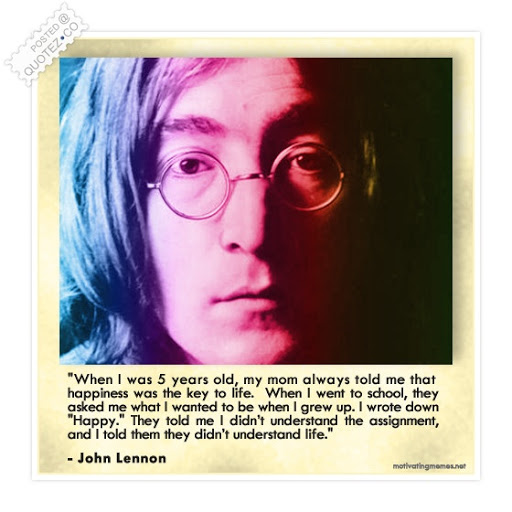
I love the quote by John Lennon featured above, “When I was 5 years old, my mom always told me that happiness was the key to life.  When I went to school, they asked me what I wanted to be when I grew up.  I wrote down ‘Happy.’  They told me I didn’t understand the assignment, and I told them they didn’t understand life.”

What I’ve realized in my advancing years is that while there isn’t anything wrong with figuring out what we want to do, however it doesn’t capture the whole picture or touch upon some of the more important aspects of our life journey, such as the lives we touch, the care we show for others, and the love we infuse into the lives of others.

Some people eventually figure out what makes their spirit soar and it may end of coinciding with what they do for a living.  If not, hopefully they will still find how they earn their check to be somewhat fulfilling, and in their off time they will pursue their deeper soul stirrings.  

For those still trying to figure things out, be it how to be really happy or what kind of career to pursue, recapturing the playful spirit of a child can be helpful in exploring the possibilities. In this day and age is it rare for people to stick with one career.  In fact if they are to really seek out those things that bring them joy, contentment and inner peace, they may change direction several times in their lifetime.  

Consider role playing, trying on different hats so to speak, just for fun.  

Ask yourself the question “If I could do anything I would…”


Consider this fun list in the photo to the left for inspiration.

What about becoming a rock star, cowgirl, tap dancer, gypsy, star gazer, fairy godmother, cupcake spinkler, or even wonder woman?

Now while none of these may be a way to make a living, simply pretending or trying on a new persona, could make living a lot more creative and fun.  

Consider the possibilities of what you could be when you are grown up….because whether you are 24, 34, 44, 54, 64 or 104, you still have room to grow.

Mojo Monday ~ Sustaining Wonder

“In truth, our aliveness depends on our ability to sustain wonder:
to lengthen the moments we are truly uncovered, to be still and quiet
till all the elements of the earth and all the secrets of the oceans
stir the aspects of life waiting within us.”
~ Mark Nepo
In The Book of Awakening: Having the Life You Want by Being Present to the Life You Have by Mark Nepo, the topic for November 11th is called Sustaining Wonder.  He begins the days reflection with a quote by Kahlil Gibran.

“In one atom are found all the elements 

of the earth; in one motion of the mind are found 

all the motions of existence; in one drop of water 
are found all the secrets f the endless oceans; 
in one aspect of you are found all the aspects of life.”
How do you sustain wonder in your life?

Do you think there is a connection between sustaining wonder and guarding your time so that you have time to ponder, reflect, and marvel? 

What things can make you think “WOW!”?

The author’s reflection on November 1st entitled The Next Moment of Love also offered up thoughts on overextending ourselves.  It begins with a quote by Thomas Merton:
“To allow oneself to be carried away by a multitude 
of conflicting concerns, to surrender to too many demands, 
to commit oneself to too many projects, to want to help 
everyone in everything is to succumb to violence.  
The frenzy of the activist neutralizes his or her work for peace.”

Mark Nepo then continues, “Merton wisely challenges us not just to slow down, but, at the heart of it, to accept our limitations.  We are at best filled with the divine, but we have only two hands and one heart.  In a deep and subtle way, the want to do it all is a want to be it all, and though it comes from a desire to do good, it often becomes frenzied because our egos seize our goodness as a way to be revered.  I have done this many times: not wanting to say no, not wanting to miss an opportunity, not wanting to be seen as less than totally compassionate.  But wherever I cannot bring my entire being, I am not there.”
Consider these thoughts and questions that he poses at the end of this section.
  • Center yourself and think of the many kindnesses that you feel called to do. 
  • As you breathe, let your heart glow around one.
  • Without thinking, pray for the others, but devote yourself today to the one.

Wonder is also mentioned in the November 9th reflection called Diving Half-Blind.  This quote by Thomas Brown introduces the topic:
“We carry within us
the wonders we seek
without us.”
Mark Nepo later in this passage writes, “….the deeper we go, the slower the world; the slower the world, the soften our way.  So we must keep calling each other into the depths of what we know.  For below the surface we all shine.  Diving in, we all turn silver.   Given to air alone, the cuts of this world burn.  But when we dare to enter what is deep, the bruises we carry soften and glow.  In truth, the more we accept our limitations and surrender to the depths below our woundedness, the more the vastness holds us up.  There is no way to know this but to dive.”
He closes with the following suggestions:
  • Center yourself and hold a pain or ached that you carry; hold it gently before you.
  • As you breathe slowly, surround your pain or ache with a loving kindness meditation that keeps broadening your prayer for all living things.
  • Allow this silent prayer to subside.
  • Now, if you can, feel your pain or ache slightly softened by your love for the world.
There is wonder in the simplest of things.  This thing called life is a wonder.  Our “aliveness” is a wonder.  Author Mark Nepo shares these profound thoughts about life in his reflections of November 24th entitled The Need to Continue.
“The longer I wake on this Earth, the louder the quiet things speak to me.  The more I experience and survive, the more I find truth in the commonalities we all share.  The more pain softens me, the deeper my joy and the greater the lessons of those things that live in great stillness.
      Before I had cancer, I used to complain so much, annoyed that every chore would need to be done again, that the grass would grow back as soon as I’d cut it.  Now I am in aw how it will grow no matter what you do to it.  How I need that knowledge.
     Now, twelve years from that bed, I am standing in a gentle rain, each drop a whisper of simple things I will never understand.  Now, there is only air in the sky of heart waiting to rain. Now, I am thinner, grayer, brighter, less able to say, and my heart has learned more on this side than it will ever let me know.  Now, I want to learn how to kiss an orange, unpeeled, and taste the juice.
       Twelve years ago the unasked-for growth disappeared, and —praise this life — I have been shedding ever since.  Now, all that remains is my armless heart wanting to live.”
  • Sit quietly and consider your thoughts as leaves and your hears as the tree.
  • Breathe slowly, and try to listen to the soil you share with everything.
  • Breathe deeply, and meditate on what is oldest in you.

Here is a poem to inspire you in all your wonder and wow-ness!


Remember Your Wow-ness by Patricia Lynn Reilly
(Poem appears in Patricia’s book called Words Made Flesh.)

Verse 1
Do you ever look up at the night sky and say WOW?
Well you’re made of the same WOW-ness as the night sky.

Verse 2
Do you ever get lost in it’s bigness and say WOW?
Well you’re made of the same WOW-ness as the big sky.

Verse 3
Do you ever feel held by its darkness and say WOW?
Well you’re made of the same WOW-ness as the dark sky.

Verse 4
Do you feel the tug of the full moon and say WOW?
Well you’re made of the same WOW-ness as the full moon.

Verse 5
Do you ever try to count the stars and say WOW?
Well you’re made of the same WOW-ness as the night star.

Voice Choir
You are composed of the same stuff as the Milky Way.
You are an exquisite dimension of the Galaxy’s development.
You are a space the Universe fashioned to feel its own grandeur.
You are an individualized expression of WOW. WOW! 

Mojo Monday ~ Designing A Vision of Peace


We talk about wanting peace.  What is peace? How do we achieve it?  Is it possible to obtain world peace?  Can we design a vision of peace? 

Israeli designer Ronny Edri is attempting to do just that.  It began with uploading to Facebook a simple poster of him and his daughter, with the words “Iranians we will never bomb your country.  We love you.”  Here is a video of Ronny Edri sharing about how it all began..


If you have yet to discover and “like” the Israel-Loves-Iran facebook page, please visit. I have been following along with this amazing project since it began.  This is a grassroots peace movement that shows how social media is changing how we can connect and see one another as people, not nationalities that are supposed to be at odds with one another.

This building of relationships and connections is incredibly powerful. When the faceless people of a nation suddenly have names and are sharing that neither wants war or mean each other harm, there is a shift that takes place.  A powerful shift.  Is it strong enough to hold back the tides of a war that political leaders may be manipulating into reality?

Thich Nhat Hanh shares this in his book Being Peace:

“During the war in Vietnam we young Buddhists organized ourselves to help victims of the war rebuild villages that had been destroyed by the bombs.

Many of us died during service, not only because of the bombs and the bullets, but because of the people who suspected us of being on the other side. We were able to understand the suffering of both sides, the communists and the anti-communists. We tried to be open to both, to understand this side and to understand that side, to be one with them. That is why we did not take a side, even though the whole world took sides. We tried to tell people our perception of the situation: that we wanted to stop the fighting, but the bombs were so loud. Sometimes we had to burn ourselves alive to get the message across, but even then the world could not hear us. They thought we were supporting a kind of political act. They didn’t know that it was a purely human action to be heard, to be understood. We wanted reconciliation, we did not want a victory. Working to help people in a circumstance like that is very dangerous, and many of us got killed. The communists killed us because they suspected that we were working with the Americans, and the anti-communists killed us because they thought that we were with the communists. But we did not want to give up and take one side.

The situation of the world is still like this. People completely identify with one side, one ideology. To understand the suffering and the fear of…[another citizen] we have to become one with him or her. To do so is dangerous-we will be suspected by both sides. But if we don’t do it, if we align ourselves with one side or the other, we will lose our chance to work for peace. Reconciliation is to understand both sides, to go to one side and describe the suffering being endured by the other side, and then to go to the other side and describe the suffering being endured by the first side. Doing only that will be a great help for peace.”

So how do we create understanding between people?  How do find common ground?  I think it is helpful as Thich Nhat Hahn recommends, is identifying with not just one side, but with both sides.  I think there can be much enlightenment when we look back and explore the history of a situation, the back story, so to speak.  What is the history between Iran and the United States of America?  Does the past between our two nations have any affect on the current situation?  If you want to learn more keep reading below.

The Iran Agenda:

I still cringe to this day when I recall George W. Bush’s State of the Union Address from January 29, 2002.  This is the speech in which Bush referred to  Iraq, Iran and North Korea as the “Axis of Evil.”  I still want to slap my forehead, shake my head and ask aloud to anyone listening, “How in the world did the President of the United States think it was okay to label three nations as evil, and even worse, do it in public at an event where the world was listening?”  

My own take on those events is that the administration was beating the drums of war and building their case to convince the American people that more wars would likely be necessary to protect their homeland.  The war in Afghanistan had begun on October 7, 2001, less than a month after the events of September 11th.   Then on March 19th, 2003, after many accusations that Iraq was hiding weapons of mass destruction, the United States, accompanied by the United Kingdom, Australia and Poland attacked Iraq.

Even after Bush’s axis of evil pronouncement  in 2002 a number of nations were alarmed at this statement. Mohammed Khatami, who was President of Iran at the time, had made a concerted effort to tone down hostile rhetoric toward the U.S. as part of a more pragmatic foreign policy, but he condemned Bush’s demonizing of Iran as “meddling, warmongering, insulting and a repetition of old propaganda.”

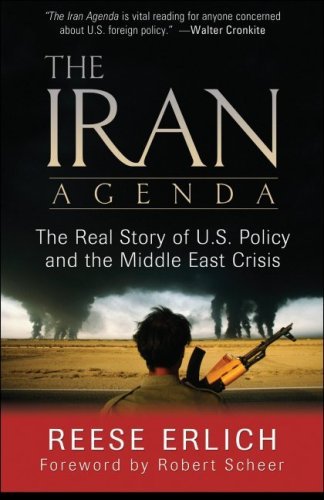
Many Iranians expressed sorrow and support for the United States after 9/11. There were even candlelight vigils held by Iranians.  What was also very fascinating to read in a book by Reese Erlich called The Iran Agenda: The Real Story of U.S. Policy and the Middle East Crisis is how “the Iranian government cooperated with the United States in its efforts to overthrow the Taliban in Afghanistan.  This may come as a surprise to those who want to neatly place all Islamic fundamentalists into one group, but Iran solidly opposed Taliban rule.  The Taliban murdered nine Iranian diplomats in 1998, almost leading the two countries to war.  Iran had supported the Northern Alliance fighting the Taliban.”  Iran was going to assist in the alliance to invade Afghanistan. The US initially praised Iran’s “constructive role” in the meetings.  “In January 2002, Iran pledged $560 million for Afghan reconstruction aid, the largest amount offered from a third world country.”  According to the author Erlich, Iranian officials told him “that they expected the United States to extend the contacts over Afghanistan into a wider dialogue about U.S.-Iranian relations.”  Instead President Bush proceeded to denounce Iran later that same month as part of the “axis of evil” and this effectively shut down relations.


An organization called Just Foreign Policy includes on their web site the following statement: “The Bush Administration has deployed a rhetoric of confrontation against Iran, including the threat of military force without United Nations or even Congressional authorization. Many of the Bush Administration’s claims that Iran is a threat echo claims used to justify the U.S. invasion of Iraq and rest on similarly dubious evidence. Policies have been approved, such as authorizing the killing of Iranian officials in Iraq, that could easily escalate into a broader military confrontation.”  In addition they state “Americans are being told that Iran is on the brink of developing nuclear weapons, supports terrorism, is helping to kill American soldiers in Iraq, and is determined to destroy Israel. Therefore, the reasoning goes, we must prepare to attack Iran.”


Stephen Kinzer, the award winning author and former foreign correspondent for the New York Times rejects this argument. He, along with a diverse group of other experts on Iran, Congressional leaders and military experts have been traveling across the country to present other perspectives and options for a more rational foreign policy towards Iran. You can read more about their ideas at the web site The Folly of Attacking Iran, which is also part of the Just Foreign Policy organization.

My understanding of the history of Iran was greatly illuminated by reading Stephen Kinzer’s gripping book called All The Shah’s Men: An American Coup and the Roots of Middle East Terror. In great detail the book shows how the United States has played an active role in Iran for decades, often in ways resented by Iranians. The USA organized a coup in 1953 against the popular and democratically elected Prime-Minister Mohammad Mossadegh. Mossadegh had been considered a problem by the British for many years. The British over the years had gained control of various assets of Iran, including their oil. While the British in Iran lived in beautiful homes with manicured lawns and enjoyed swimming pools and such, the Iranians who worked for the oil company lived in squalor. Repeated requests to the British to share the profits more equitably with Iran and to improve conditions and wages for the workers were always met with disdain and no change.


As Iran began to question the British involvement in their county things grew more heated. The British were unwilling to be diplomatic or negotiate. They even tried to convince President Truman to help them overthrow Mossadegh so they could replace him with someone they could control. President Truman wanted no part in their imperialistic desires. The British were almost ready to just attack and take over Iran but world opinion kept them at bay a bit longer. When Truman didn’t run for office again and President Eisenhower was elected the British suspected the USA might be more amenable to involve themselves in Iran. They were correct. Certain members of Eisenhower’s administration were very open to the idea of choreographing regime change. The overthrow of Iran in 1953 is considered to be the very first coup that the American CIA organized.

After the coup, the monarchy of the Shah was reinstated and supported by the United States. There are many who believe that Iran could well have continued on the path of democracy if it wasn’t for the meddling of the USA and Great Britain. The irony is that America is supposed to be the great supporter of democracy and yet it overthrew a democratic prime minister in order to give a monarch full control of the nation.

Years later the people of Iran rose up to remove the Shah, who some say ruled with an iron fist. Under his rule he created a domestic security and intelligence organization called Savak. According to articles in Federation of American Scientists and TIME magazine, SAVAK “tortured and murdered thousands of the Shah’s opponents. It has been described as Iran’s “most hated and feared institution” prior to revolution of 1979, for its association with the foreign CIA intelligence organization, and its torture and execution of regime opponents. It’s “torture methods included electric shock, whipping, beating, inserting broken glass and pouring boiling water into the rectum, tying weights to the testicles, and the extraction of teeth and nails.” After the 1979 revolution, a CIA film was found which had been made for Savak security forces on how to torture women.

In the Bush years there were alarming headlines in the news in which the Bush administration accused Iran of seeking to build nuclear weapons.   A decade later this topic continues to make headlines and is sometimes a topic of debate, as we saw in the sparring between Vice President Biden and Paul Ryan.  Iran has however consistently maintained that they are only seeking nuclear power to improve conditions in their country and they are adamant in insisting that other countries have no right to dictate that they cannot do so. 

Here is a brief introduction to the history of the nuclear program of Iran as taken from Wikipedia.  Iran’s nuclear program was “launched in the 1950’s with the help of the United States as part of the Atoms for Peace program. The participation of the United States and Western European governments in Iran’s nuclear program continued until the 1979 Iranian Revolution that toppled the Shah of Iran. After the 1979 revolution, the clandestine research program was disbanded by Ayatollah Ruhollah Khomeini, who had serious religious reservations about nuclear weapons, which he considered evil in terms of Muslim jurisprudence. Small scale research restarted during the Iran-Iraq war, and underwent significant expansion after the Ayatollah’s death in 1989. Iran’s nuclear program has included several research sites, two uranium mines, a research reactor, and uranium processing facilities that include three known uranium enrichment plants.

In a January 2012 article in Salon Magazine, Glenn Greenwald,  noted the “killing of at least five Iranian nuclear scientists during 2010 and 2011, by unknown attackers, with no apparent outcry in the Western media.”  When researching about Mossad, the Israeli Intelligence agency, more details were forthcoming about how “Mossad has been accused of assassinating Masoud Alimohammadi, Ardeshir Hosseinpour, Majid Shahriari, Darioush Rezaeinejad and Mostafa Ahmadi-Roshan; scientists involved in the Iranian nuclear program.”  Per Wikipedia, Mossad “is also suspected of being behind the attempted assassination of Iranian nuclear scientist Fereydoon Abbasi.  Meir Daganwho served as Director of the Mossad from 2002 until 2009 – while not taking credit for the assassinations, praised them in an interview with a journalist, saying ‘the removal of important brains’ from the Iranian nuclear project had achieved so-called ‘white defections,’ frightening other Iranian nuclear scientists into requesting that they be transferred to civilian projects.”

“In early February 2012, Mossad director Tamir Pardo met with U.S. national security officials in Washington, D.C. to sound them out on possible American reactions in the event Israel attacked Iran over the objections of the United States.”


Author Stephen Kinzer also addresses the nuclear issue in the preface to his book All the Shah’s Men: “The only way Iran can reasonably be expected to curb its nuclear ambitions would be through some kind of ‘grand bargain’ in which its own security concerns would be addressed.  That would probably require a solution that goes beyond Iran’s borders and creates a new security architecture for the Middle East.  It is not reasonable to expect Iran to abandon its nuclear program as long as its main regional enemy, Israel, and its main world enemy, the United States, are nuclear-armed and issuing a stream of barely veiled threats to Iran.”

I think that the Just Foreign Policy organization summed it up well when they stated the following “The recent history of relations between the United States and Iran has been marked by misunderstanding and mistrust shaped by the unjust use of violence and threats of violence. Violent conflict has not served the interests of either country. Military threats deepen hostilities and resentment and future conflict becomes more likely. Serious diplomacy between our two countries is needed.”

I would add to the need for greater diplomacy the following: 

  • The healing of old wounds. 
  • The releasing of the past.  
  • Forgiveness.  
  • Living in the present.  
  • Connecting. 
  • Finding common ground.
  • Choosing Love.
  • Choosing Peace.

I have written before about Iyanla Vanzant’s prescription for working through an issue, which is to Feel,  Deal, and then Heal.  Feel.  Deal. Heal.  Do you think we could get her to do an intervention for some heads of state?  Have her give them some straight talk and get them to play nice with one another and work together to make a peaceful world our reality?  

In the meantime let us join the thousands of people sending in their photos and sentiments of wanting there to be peace, compassion, friendship, love and understanding between us all.  While some may be lost in a world of revenge, greed, fear, anger, hatred and ignorance, those of us who see there is another way will continue to design a vision of peace.

Please visit the Israel-Loves-Iran Facebook page and add your part to this campaign.  There are other pages now too, such as America-Loves-Iran that you can also visit, “like” and share with your family and friends.  It is through such positive sharing and enlightening that we tear down walls and bridge gaps of misunderstanding and fear. We can all be a spokesperson for peace.  There can never be too many.  


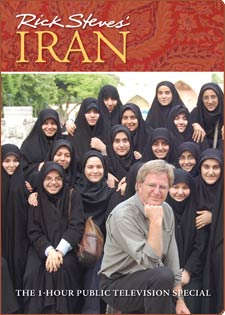
If you can take the time, below is an incredibly eye-opening and informative video with Rick Steves who makes traveling documentaries.  In this video he visits Iran and allows us a glimpse into the lives of current day Iranians, while also sharing some of the rich history of this fascinating country.


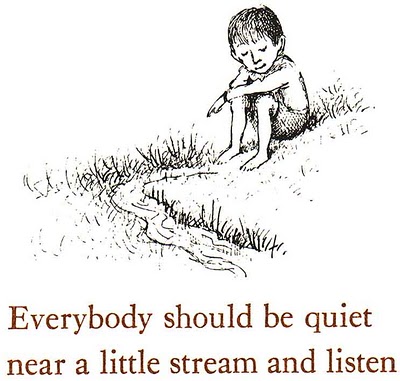
Mojo Monday ~ Shhhhh….


Turn down 
the volume of demands
and listen
to the grace of
the small,
the silence,
the whisper.

~ Mary Anne Radmacher


Does the pace of the world ever seem frenetic to you?  

Do you ever find yourself struggling in order to keep up with emails, texts, blog posts, facebook posts, on-line classes, and phone messages?  

Do you ever find yourself filling every moment of your day with the many forms of communicating and social networking that are now possible?

While driving or at stoplights do you talk on the phone, text, check email, or surf the web?  

Do you ever feel inundated by too much information and too much stimulus?  Perhaps too many offers to participate in this or that teleconference or amazing life-changing workshop?

Do you ever take time to just sit?

Do you ever take time to just think?
Do you ever carve out quiet time?


Does the idea of quiet time seem far-fetched, because of the demands of your life?
Is quiet time something you long for or is it something you would dread?

This piece started to percolate in my mind after reading that a favorite author of mine by the name of Brene Brown was struggling with being on all the time.  She was finding herself checking emails or the web at stoplights.  She was filling every moment with communicating in some form or other. 
Just the thought of doing those things sounds crazy making to me.  I wondered, when does she get down time, quiet time, time to just think? It made me wonder how other people balance out being busy, with taking necessary time out for oneself?
Once a week, for work, I have an hour drive out of town and then I turn around and do it again in the afternoon to return home.  While the drive can sometimes get stressful due to driving conditions, for the most part, I use this time to simply listen to music and think thoughts.  I may come up with a new idea for an article.  I may ponder something.  I might imagine a new painting.  I may try to work out a problem in my mind.  The idea of using that time to communicate with others is not at all appealing. This for me is a perfect time to be unreachable.  


Is quiet time at all important?  Are we humans missing out on something if we fill our days with constant stimulation such as pinning pictures, reading status posts of friends and family, texting till our fingers are numb, talking on the phone at all hours, or signing up for every teleconference that hits our in-box?  

In wondering about this very thing I came across this quote by the Dalai Lama:

“If every 8 year old in the world is taught meditation, 
we will eliminate violence from the world within one generation.”

Why would the Dalia Lama believe such a thing?  Would a violent free world really be the result of all the children meditating?  Would meditation really change them and our world that much?  

Cynthia Dawn,  a writer, children’s meditation facilitator, raw and vegan food enthusiast enthusiast, and co-creator of The Intention Tree Project, shares this about meditation:

“Meditation is a powerful adeptness for anyone and we are learning (remembering really) that when we have this modeled to us as children the reverberations are profound!
On a physical level, scientific studies have found that meditation:
* increases levels of immunity
* prevents and/or reduces cancer and autoimmune disorders
* improves hyperactivity and attention deficit disorders
* alleviates respiratory disorders and digestive problems
* reduces the severity of asthma and panic attacks
On a mental and emotional level, experts have found that meditation:
* encourages a healthy sense of self
* promotes well-being and self-esteem
* increases focus, concentration and problem solving skills
* fosters awareness and creativity
* instills connection, understanding, and compassion
On a Universal level many believe that meditation is a large part of the solution for world peace. When we are at peace with ourselves and no longer fighting a physical, mental, or emotional war ~ we can be true peacemakers within our world.”
The sentence that really impacted me from above is:
 “When we are at peace with ourselves 
and no longer fighting a physical, mental, or emotional war ~ 

we can be true peacemakers
within our world.”  


I also came across this report about meditation in public schools:

“A University of Michigan study concludes that two, ten-minute meditation sessions per day in a public school setting reduces stress in children and teens and promotes emotional stability.  Participants within the study group were found to exhibit less verbal aggression, anxiety and loneliness.  Based on this study, a growing partnership of Detroit area parents, teachers and physicians are now calling for schools around the country to offer meditation breaks each day.  ‘It wouldn’t be difficult,’ a spokesperson said, ‘and it requires no expensive equipment, no special outfits or footwear.’  Since meditation is not a religion, proponents claim that meditation would be an appropriate stress reliever in the schools.”

It seems that with meditation or even just the practice of getting quiet regularly, allows you to center yourself.

BJ Gallagher at the Huffington Post wrote a brief post titled Buddha: How to Tame Your Monkey Mind that explains more.


Buddha described the human mind as being filled with drunken monkeys, jumping around, screeching, chattering, carrying on endlessly. We all have monkey minds, Buddha said, with dozens of monkeys all clamoring for attention. Fear is an especially loud monkey, sounding the alarm incessantly, pointing out all the things we should be wary of and everything that could go wrong.
Buddha showed his students how to meditate in order to tame the drunken monkeys in their minds. It’s useless to fight with the monkeys or to try to banish them from your mind because, as we all know, that which you resist persists. Instead, Buddha said, if you will spend some time each day in quiet meditation — simply calm your mind by focusing on your breathing or a simple mantra — you can, over time, tame the monkeys. They will grow more peaceful if you lovingly bring them into submission with a consistent practice of meditation.


Do you long for more peace in your heart and mind?

Are there things that feel unsettled for you?

Do you feel content and happy most of the time?

Do you have time in your life to just be, to dream, to imagine, to just breathe?

What would it really take for you to start a meditation practice of your own?

What would it take to simply ensure that you get quiet time regularly?


“If we have not quiet minds, outward comfort will do no more for us than a golden slipper on a gouty foot.”

~ John Bunyon

“We need quiet time to examine our lives openly and honestly…spending quiet time alone gives your mind an opportunity to renew itself and create order.”

~ Susan L. Taylor


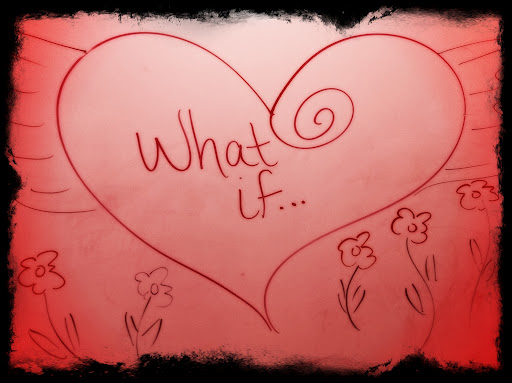
Mojo Monday ~ What if…

by Michelle Fairchild


What if…

Your purpose was simple?

What if…

Love is all that matters?

What if…

Our collective purpose on this planet was Love?

“Love Thy Neighbor” by Kay Smith

What if…

All we really had to do during our time on this planet was to love one another?

What if…

After Love, everything else about having a purpose was secondary?

What if…

We discovered that living and breathing animals all want to live as much as we do?

What if…

We began to live our lives as if Love is all that matters?

What if…

We didn’t take things personally?

What if…

We realized we are perfect as we are?


What if…

We forgave yourselves…and everyone else too?

What if…

We gazed into the eyes of our former five-year-old selves?

What if…

We set anything painful from our past down and give it a loving kiss goodbye?

What if…

We all released our fears?


What if…

We took exceptional care of ourselves?


What if…

We took exceptional care of our planet?


What if…

We loved ourselves?  Really, really, really loved ourselves?

What if…

We had only a year to live?  A month?  A week?  A day?  An hour?

What if…

We realized that we are all connected?


What if…

We finally understood the mysteries of our world and the universe?


What if…

It was revealed that every single one of us on this planet is a part of God?


What if…


Mojo Monday ~ Be the Change


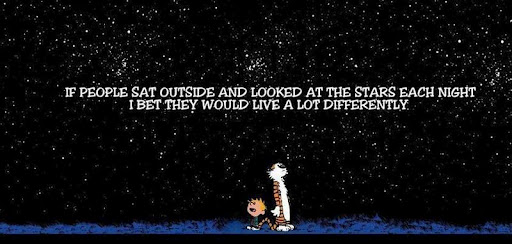
I look up at the stars and I feel both small and big at the same time.  Gazing at the stars leaves me with both a sense of wonder and a realization that we are all on this planet together, connected.  This week’s headlines in the world news left me feeling sad.  Headlines that feature violent acts, which in turn illicit fear, anger, misunderstanding, disconnection, and calls for revenge and yet more violence.  Such stories can lead people to grow fearful of people that they don’t even know and it can lead to beliefs that there is an “us” and a “them.”

Recently my husband and I saw a bumper sticker that read “I am already against the next war.”  Yes, indeed, that is how we both feel.  Yet, what can we two small individuals do in the big scheme of things to prevent something as big as war? 

I have been reading a book in bits and pieces, as there is much in it to contemplate and digest.  The book is by Ed and Deb Shapiro and is called Be the Change: How Meditation Can Transform You and the World.  The authors include amongst their own stories the stories and words of more than one hundred meditation practitioners.  Those included vary from Oscar award-winning actress Ellen Burstyn, to Jon Kabat-Zinn who is director of the Center for Mindfulness in Medicine, Health Care, and Society, to best-selling author and inspirational speaker Marianne Williamson. 

In one section entitled “What One Person Can Do” here is what is written:

“One person can make a difference, as we have seen many times throughout history.  Usually, the only thing that stops us from stepping out and taking action is our own sense of inadequacy or doubt.  Rama had a vision of bringing people together, and, as a result, nearly 10,000 Soviet and American citizens have participates in her Citizen Summit programs.  And yet when she began this work, she was a housewife and a yoga teacher with no idea how or if she could do anything.”  Rama Vernon shares this about her story “The Cold War was at its peak.  The Korean Airlines disaster had recently occurred, bringing us very close to a nuclear war.  As I put my children to bed, they would ask, ‘Mommy, are we going to be blown up?’  ‘No, of course not,’ I would reply, reassuring them as much as myself.  ‘Our government would never let that happen.’  And then, through my yoga-teaching work, I was invited to travel with thirty others on a Peace Mission to the Soviet Union.  So, quite unexpectedly, I was in Moscow, standing in the center of what Reagan had termed the Evil Empire, behind what Churchill has called the Iron Curtain.  I was raised to believe that our thoughts create our reality, and what scared me most was that I was not alone in my fear, that thousands of Americans shares those same fear, and that if enough of us continued to hold those fears, we would create the very thing that we feared most.  I realized that the only way to change such a stereotype that we have been conditioned to believe is to bring people face to face with one another.  We could not take the Russians to the United States, so I resolved to bring the United States to Russia.”

While there is a great deal of depth in this book, there is also sometimes humor.  One such moment is when Ed Shapiro’s shares a personal story about him and his wife Deb’s private meeting with HH the Dalai Lama: “After some thirty minutes of discussion, I was feeling so moved by this gentle, simple, and loving man that I just wanted to stay there and learn from him.  I did not want to leave!  I was completely in love with the compassion and wisdom emanating from this delightful being.  Finally, I said to him, ‘I don’t want to leave; I just want to stay here with you!’ I thought he would say yes, how wonderful, I recognize your sincerity, but instead he just smiled and said, ‘If we were together all the time, we would quarrel!’”

It was both surprising and refreshing to hear that a revered spiritual leader and icon like the Dalai Lama could admit to at times being quarrelsome.   It also led to a brilliant realization by Ed when he shares this about relationships:

“So, relax, if HH the Dalai Lama, someone who meditates for a few hours every day, can quarrel, then so can we!  Inevitably, there are going to be times when a relationship is troubled, when differences collide and egos clash, when stories and histories intrude, or needs are not met.  But the holding on to such disagreements and the ensuing shame, blame, and hostile silence is the real problem.  There will always be times of flow and times of discord.  Having a disagreement or even getting angry does not make us an angry person; it is not the whole of us.  Who we are is still basically good; we needed to make a point and just may have done it in a rather unskilled way.”

Interfaith Peace mandala
When Deb and Ed Shapiro were with the Dalai Lama they also asked him what they could do to help humankind to awaken to caring and kindness.  The Dalai Lama said that people of different religions should come together in peace and respect and talk openly, honoring each other’s differences and similarities. 


Do you meditate?  If yes, do you do it regularly and why? 

What are your thoughts about being the change?  Do you feel empowered to create change? If yes, how?  If no, why?

What do you think you could do to make a difference? 


In the midst of events taking place on the larger political scene there are things that give me hope and that demonstrate how people from around the world want us to come together in peace.  On elephantjournal.com I came across a slideshow of photos taken at a pro-USA demonstration in Libya following the deaths of four Americans, including Ambassador Christopher Stevens.  You can find the slideshow of photos by clicking here

I have also been following the Israel Loves Iran campaign on Facebook.  The photos, letters and stories that continue to be published on-line are incredibly touching and show the very personal side of people who do not wish to be at war with one another.  Here are a handful of the photos that have been shared.


Hillary Clinton also made powerful remarks in light of the recent violence.   


If you would like to read more about meditation and transformation ~  Here are some more stories that appear in the book Be the Change:

Sylvia Boorstein – “The point of meditation is to keep the mind free of confusion. Meditation, past calming our nerves, past being good for our blood pressure, past allowing us to work out our own internal psychological dramas, which it does, past helping us to get along with our kin and our community, is a way of really deeply seeing the truth that the only way to ameliorate our own suffering and the suffering of the world is to keep our minds clear.”

Robert Gass and Judith Ansara – “We can get lost in the story, which usually has fault or blame attached to it—I’m feeling this because this happened or you said that—and so we have learned to just drop the story.  Even when we are not in the place that we would like to be, we do not process about how we got there or about how we are going to get out of it; we just stop, because otherwise we can start tearing at each other.  Usually, one of us will say, ‘Are we having a conversation that is contributing to the greater good?’  We get connected first and then talk about what was disconnecting us, rather than tearing at each other from a place of disconnection, thinking that will get us connected.”

Seane Corn – “First yoga changed my body; then meditation changed my attitude.  Then I realized that whether my practice was fifteen minutes or four hours was irrelevant because it was not about how yoga changed me, but how I, through this practice, can being to change the world.  What I really felt was how dare I not step into the world and hold that space?” 
“I first started by working with child prostitutes in Los Angeles.  I did not know how my life was going to change when I entered the shelter, but I met my shadow there.  I hated those girls —and it wasn’t just girls, it was young boys too—they were so arrogant and defiant as they were so wounded.  They were also like a mirror in which I saw the part of myself that had been abused, and how I had nto dealt with my own defiance, arrogance, or wounding.  They really did not accept me at first.  Are you kidding?  This big-mouthed, floppy-headed white girls from new Jersey bounding in to tell them how to do yoga?  They slaughtered me!  It was the most humiliating experience I had ever had because I went in trying to fix them.  I did not go in there recognizing that I am them.  They took one look at me and were totally unimpressed.  No way I wanted to go back.  I sat in my car and cried and cried. The next time I went, I was way more humble as I had recognized that we were there to serve each other.”

Ajahn Sumedho – “We are not isolated entities; we do affect each other.  The more we experience this in meditation, the more we recognize how our own relationship to society need not be one of just being critical or putting up with or ignoring it, but of using our abilities, intelligence, and talents to serve each other.  If I feel a sense of ‘me’ as a self-centered isolated being, then I will just think of my own immediate pleasure or needs and I have no relationship of sensitivity to anything else.  But as I open to the truth of our connectedness, then I have a respect for all life; I no longer see others as just there for my own selfish exploitation.”

Kirsten Westby-  “I needed to mediate before I could even leave my room in the morning.  It gave me the strength to recognize that suffering is the human experience that we all have in one form or another, and not to feel overwhelmed by it, not to lose my balance…I worked with Urgent Action Fund for five years, traveling into war zones and listening to stories of what was happening to women and girls…More than anything else, meditation released me from anger.  I could feel anger coming up, but I knew that my way of surviving and working in this context was to let it go, to know that these boys were not the enemy, but were just as much a victim of this whole machine of war, forced into the army at such a young age.  Really there was no enemy; it was just a whole environment of people who had been used and abused.  I would constantly remind myself of their human qualities so I could start the day without any aggression.”

Joseph Goldstein – “There is one basic understanding that helps us in every dimension of relationship; that each one of us is totally responsible for our own emotions.  Some time ago, I was in a relationship with someone and as we were having a little argument, she turned to me and said, ‘Stop making me feel aversion.’  I started to laugh, which, of course, did not help the situation, but nobody makes us feel anything.  How we feel and how we relate to what we are feeling is completely up to us.  Generally, we blame others for how we feel; we think others are responsible for our mind states.  If we all took responsibility for our own emotions, then most of our interpersonal relationships would be a lot easier.”  “If we have the view that other people are responsible for how we feel, then we are turning over all the power to them.  We cannot control what other people do—their minds, their attitudes, or their behaviors.  But if we understand that how we are feeling is completely up to us, then we can reclaim that power.  Then, no matter what anybody else does, it is up to us how we react, how we relate.  Nobody can make us feel a certain way.”

Mark Matousek – “Albert Einstein described human self-absorption as a kind of optical delusion of consciousness.  Our obsession with physical survival prevents us from seeing beyond this primitive level, which is why meditation is so mind blowing.  Dropping below the animal level, we discover another way of seeing and being that is more vast, inclusive, loving, and durable than the fearful, self-protective mind we use ordinarily.  With meditation, prayer, yoga, or some tool for reaching through the selfish mind to our greater nature, we are doomed to remain in the animal mind.”

Mojo Monday – Our Stories

What do we know about the world?  How do we know what we know?  We might respond that we have learned about our world through books and classes we have taken in school.  What it comes down to is that our human world is based on story.   For thousands of years stories were memorized and passed down verbally through the generations.  Once written language came into being stories were recorded in written form.
I have always loved stories and probably because of this I became an avid reader at a very early age.  I also loved learning about the world, different cultures and the history of the people who have inhabited this planet for thousands of years.  My six year old twin daughters just started first grade and we had an option at their school to have them take an early morning enrichment class in which they will learn Spanish and about Latin culture.  One day after picking them up from school they were excited to share with me the new Spanish words they had learned that day.  They asked me “Where do people speak Spanish?” and I explained a bit about Spain and then how the Spaniards had traveled to what is now known as Mexico, and how the language was adopted by this other land.  My daughter Aubrey then asked me from the back seat “Mommy, how do you know all these things?”  It was such a curious question and I responded that I had learned about these things from books and classes and that my love of history led me to take a lot of history classes. 
While I may have a college degree in history I sometimes still wonder “What is history?”  Sure there are some hard facts involved with so-and-so being born on such and such a date, or a war beginning in a particular place on a particular date, but those facts are part of a bigger story, a human story.  While we may think that our history books are based on facts, they are also infused with the perceptions and biases of the historians that wrote them in their current time.  How historians view something in a particular era, century, or even in a particular decade, changes and evolves, because the historians themselves are going to be influenced by their own life story, which has been formed by the time period they grew up, their personal views, opinions, prejudices and personal experiences.   There are also the ones behind the scenes, such as the publisher or the powers behind a publishing house, who may have their own ideas or agendas into what gets published and what doesn’t.  One may try to be impartial and unbiased, but our own stories will and can color how we respond or view things.
One of the papers I wrote for a university history class compiled how the  historical perspectives changed over time regarding Booker T. Washington and W. E. B. Dubois and their roles in the civil rights movement.  Both hold a significant place in American history and African American history.  It was fascinating to see how the historical views and opinions regarding these two men shifted and evolved through the years. 
Card from The Voice of Knowledge deck by Don Miguel Ruiz

Where I am leading with this is to a much more personal level.   We all have stories.  Our lives are stories, series of happenings, events, activities, doings, and while some fade into the mists of the past and out of our memories, others stay with us.  Some of them are certainly, and hopefully, positive, and bring forth feelings of nostalgia and can even have the power to conjure up feelings of contentment and happiness even in the present moment.  Yet our human nature also gives us a tendency to remember and hold on to events that were painful, and if we give our stories power and hold to them tightly, these stories can affect us deeply.   We can even give them the power to create very real psychic wounds.  The painful stories, if held onto too tightly, and believed in strongly enough, can unfortunately lead us to negative spaces and dark places. 
Just like any other person walking this earth I have my own collection of stories. Stories about my childhood, my family, events that took place, traditions carried on, my young adulthood, my relationships and on and on and on.  Some of the stories were sweet, others comical, some were painful, and I even allowed a few to take me to dark wounded places.  Some life events came into alignment though that led me to delve deeper into my stories, sometimes so painfully, that I went through what I describe as a dark night of the soul, and yet the healing that took place on the journey has been most remarkable.  These life events include: choosing a life partner, moving, marrying, becoming a mother to twins, struggling in my marriage, shutting down, gaining 100 lbs, retreating from relationships, experiencing shifts in friendships, questioning my life purpose, developing cracks in my rose-colored glasses, entering into therapy, learning to accept, then like and love myself, forgiving both myself and others, finding a tribe and community (Cosmic Cowgirls) that nurtures me, gaining courage, taking chances, entering into marriage counseling and therapy one more time, claiming to be an artist and writer, writing, painting, learning, teaching, loving and grasping the true meaning of grace.
I have been contemplating and wondering about how we hold onto and process our pain and wounds.  What I realize from own experiences it that it took doing a few key things that culminated in me seeing my stories with new eyes.   The first was the talk therapy that helped to purge all the really old stuff that had been crammed into my soul for way too long.  Yet, I know that talk therapy would not have been quite enough to help move me through my process.  What also deserves a great deal of credit for the personal growth and healing that took place is the work I have done with Cosmic Cowgirls.  I entered into the tribe via attending the Bountiful conference in October 2008.  The work that Cosmic Cowgirls is doing is revolutionary.  There is a reason that women from all walks of life, artists, writers, therapists, healers, poets, dancers, singers, spiritual leaders and creatives of all types, are being drawn to the courses and workshops being offered.   While some women may be initially drawn to the painting portion of the classes, or others to the writing part of the classes, it is how everything is blended together spiritually, that leads one through a process unlike any other.  
What is it that Cosmic Cowgirls offers that promotes healing and personal growth? As an example I will share my most recent experience at the Cosmic Cowgirls Feast of Frida Story Weaving workshop.  Our Cosmic Cowgirls always begin with us gathering in circle.  The space is safe and sacred.   During our circle time we share in the Red Thread Ceremony where a long red thread is passed from woman to woman as we share our names and usually some word or sentence that gives insight into where we are at or what we wish to gain from our experience with one another.  The Red Thread Ceremony always concludes with each woman getting to keep a piece of the red thread as it represents how we are all connected to one another. 
In this particular workshop we were focused on artist Frida Kahlo and yet we also took it to a very personal level by reflecting on our own stories.  We created paper altars over the course of the two days and they came into being from prompts, by quiet reflection, journaling, sketching, some one-on-one sharing, and then turning the stories into art with drawings and paintings. 
This particular process had us pick one particular story from our past.  In the first corner of the panel of the altar one was to share a story about something that had happened.  An example given was of a woman who was told her art wasn’t any good while the art instructor tore up her picture.    In this particular version the person was then to depict what she decided about herself based on that one experience or story.  In this particular situation the woman decided or came to believe that she had no artistic abilities.  The next panel or part of the story was to share how this experienced had informed who she was now.  In our example this woman feels sad and feels creatively stuck.  In processing this story she is asked if this story is true.  Does this one experience really mean she is not an artist?  Does the opinion of this art instructor really mean anything?   The woman was then asked to claim a new belief about herself, in essence to create a new story for herself.  In her new story this woman gets to claim herself an artist and free her creative spirit. 
Card from The Voice of Knowledge deck by Don Miguel Ruiz

What I found refreshing for me during this experience is that most of my old stories had lost their charge.  I knew what the old story was and I could write about it and talk about it, but I no longer felt that emotional tug when I thought about it.  It was an aha moment of realizing how far I had come in healing old wounds.  Writer and inspirational speaker Iyanla Vanzant states that “When you can tell the story and it doesn’t bring up any pain and tears, then you are healed.”   I found that when it came to creating my own personal altar I was much more focused on my image that represented me today and on what I was claiming for me now and in the future.  Most importantly I really believed what I was claiming, rather than it being wishful thinking or about where I wanted to get to at some point in the future.
Creating new stories for oneself may take some time.  It may also take time to release old stories.  Some questions to ask yourself as you consider your own stories are “How does this story serve me and my life?”  Is it helpful?  Does it make me feel good or bad about myself?  Is it healing or hurtful?  If it protected me in the past, do I still need protecting now? 
You can also consider viewing your own stories through a more neutral and objective lens.  If you have ever felt that you are not enough.  Take a step back and ask yourself “Is that true?”   
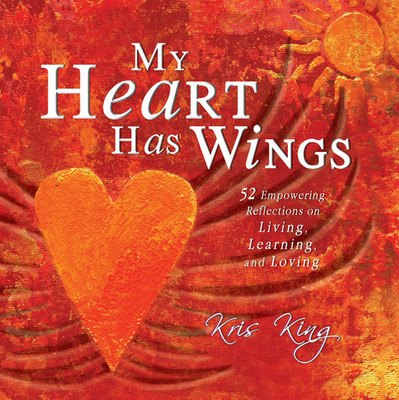
Author Kris King who wrote a beautifully thoughtful book called My Heart Has Wings: 52 Empowering Reflections on Living, Learning, and Loving wrote this about telling stories, “If you want your future to be a repeat of your past, keep telling your story.  If you want your future to be a bold and daring adventure, start dreaming. The choice is yours!” 
At Cosmic Cowgirls we believe that you get to write your story, paint your story, dance your story, dream your story, sing your story, create your story and most certainly, even turn your story into poetry.  

Mojo Monday ~ Equilibrium

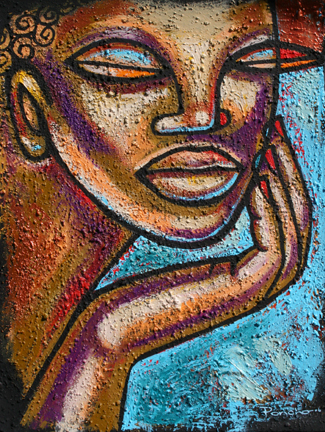
Contemplate U by Larry Poncho Brown

Lately I have been feeling more contemplative and observational about life.  It seems as if I know quite a few people who are facing very difficult health issues or life challenges.  Some of them are people I have known most my life.  The pattern of life can sometimes seem very rote for all of us with our daily routines, but then life also has a way of throwing the unexpected at us too.  Sometimes life is incredibly joyful and everything seems to be going our way.  Then a day arrives when life seems really hard and we feel very challenged by health issues, job losses, tragedy, death and more.   

During a particular difficult time we may even wonder, “Am I going to get through this?”  I have certainly felt that way at times.  Back in 1995 when my fiance died in a car accident I wondered for a great long time if I would ever be able to feel happy again.  The loss felt so deep and profound.


What I have learned from my own life experiences is that we humans are remarkably resilient.  We are tough, even when we may feel weak and are incredibly sensitive.  Life really is much like a roller-coaster and there are always going to be ups and downs.  There will be good times and tough times.  Even just remembering inside our head the phrase “This will not last forever” can help pull us through.  Though of course the other side of this coin are that those magic and blissful moments, that we sometimes wish could last forever, but alas cannot, because even the great and good things come to an end.  Yet have no fear, more great and good things are always ahead of us too.  


I think that trying to see that there is a bigger picture and a longer view to life, can help us get through the darker days.  If we choose to live our life more this way, the dips of the roller coaster of life don’t seem as scary or an pronounced.  I think we can choose to learn from our life experiences to flow more with the ups and downs.  There can even be comfort in knowing that a particularly difficult time won’t last forever.  We will rise again.  


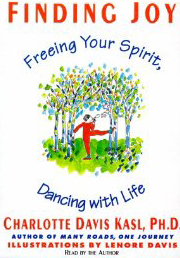
Here is a wonderful essay along the lines of this topic by author Charlotte, Davids Kasl, PhD from her book Finding Joy: 101 Ways to Free Your Spirit and Dance with Life.

“It Matters, But It’s Not Serious”


“Having balance in our lives helps us find joy.  Keeping our equilibrium is about letting things matter yet realizing they are probably not of earth-shaking seriousness.

People who get lost in the ‘it matters’ side of the equation tend to treat every little ache, slight, upset, mistake, or rejection as if they qualify for headline news.  Someone slights them and they hold on to it, chew on it, bear grudges, or get obsessed with it.  On the other hand, people who don’t let anything matter tend to grin and bear it, numb out natural feelings, and say ‘ It’s fine’ even when their best friend betrays them, the roof leaks, or their feet ache.
Both of these approaches leave out part of the picture.  If you tend to create a big drama about life’s bumps, you might want to develop your ability to realize that it’s not terribly serious –it’s only a cosmic blink in time.  On the other hand, if you tend to tough out situations and play the martyr, you might want to give yourself permission to let things matter a lot more.  let yourself feel your anger, jealousy, sadness, frustration, hurt, or resentment.
One way to balance the two concepts is to first let it matter.  When something upsetting happens, let yourself feel the disappointment.  Don’t swallow it.  Don’t rationalize it.  Feel it.  Otherwise, it fests away inside.  Then, after you have had a good fit or a good whine, back off and put the experience or problem in perspective.  Look at the big picture,  Find a phrase that brings you back to yourself, and puts things in perspective.  (I remind myself that I have shelter, a warm bed, food, friends, and work, and the rest is gravy.)  Then write it down and put it up someplace so it will be there when you need it.  The more we accept our inner world and the less we deny, the more we come home to our center and the dwelling place of our joy.”

Do you feel you are able to keep your equilibrium?  Or are there things that set you off kilter and make it difficult to stay balanced?

Do you have a phrase that helps you keep your perspective?


What do you think of the phrase “It’s only a cosmic blink in time?” 


Mojo Monday ~ We Are All Meant to Shine!

Your playing small does not serve the world.
There is nothing enlightened about shrinking
 so that other people won’t feel insecure around you.
We are all meant to shine, as children do.”
~ Marianne Williamson
Come sit down.  Make yourself comfortable.  If it was winter I would tell you to go ahead curl up on the couch, with a soft cuddly blanket to keep you warm, and I would serve you some hot Moroccan mint tea, my favorite.  However in my neck of the woods it is summer and we are in the midst of our annual triple digit days.  So instead I will invite you to sit in a lounge chair in our backyard, and you can put your feet in the cool water of our kiddie pool, while we enjoy some cold ice tea together.   

Now that you are settled in I want to share with you how round these Cosmic Cowgirl parts we have been discussing the topic perspective.  I have two very simple points of view to present about life perspectives:

The first one is: Life’s too short not to wear a red boa.
The second one is: We are all meant to shine!
You may have giggled when I told you that life is too short not to wear a red boa.  Quite a few people do.  You may have even laughed when I surprised you by draping a red boa around your shoulders.  The other possibility is that you looked at me like I wasn’t quite all there, wondering what was up with this red boa thing.
Well, the philosophy of The Red Boa, as I like to refer to it in short, is about having more fun and enjoying life more in the present.  Now this approach to life may come easily to some folks.  There are people with naturally positive, happy and laid back attitudes.  However, I recognize that for some individuals this way of being can be very foreign and it can take some actual effort at first to practice at lightening up.  There are also plenty of people who, like myself, fall somewhere in the middle of that spectrum.  Of course there are always going to be tough life experiences that come along now and again and can make it tough to see the brighter side to things.  There are a number of things that can help us all to keep perspective about this thing called life.  The first one, while it may seem a bit morbid, it is to remember that this thing called life is not a permanent gig that will last forever.  Every single one of us on this planet has an expiration date, it may be many years from now, or it may arrive sooner than that.  The reality can be uncomfortable to consider, but when taken into consideration can help us keep things in perspective.
Let me assure you that I don’t walk around with rainbows shooting out of my ears, sprinkling happy glitter while I skip through city streets nor do I have birds and friendly animals scampering around me while I sing angelically in a forest.  On occasion I do wear glitter and truth be told I may bust a move while cleaning the house, especially if a band like the Gipsy Kings is playing.  
Sometimes my life feels grand and sometimes I want to scream “get me out of here.” Many wonderful things have occurred in my time here on planet earth.  My life has been full of abundance and I always try to be grateful for all that I have.   My life has also been affected by tragic and deep loss and I have even experienced depression.  A few years ago in fact I went through what I describe as a dark night of the soul.  Yet somehow I have always managed to return to what I call a sunshine spot.  Sometimes the return trip to my sunshine spot is quick and I stay there for an extended period of time.  Sometimes I can’t find my way back there for a long time, and those are the hardest times of course.  I won’t delve into all the details of my soul’s story right now, but I believe there is much we can learn from one another’s life stories.  Especially when brave souls come forth to share how they triumphed over adversity and chose to rise above it all.
Perhaps even after the introduction to The Red Boa philosophy you are still asking yourself “But why a red boa?”  I am here to tell you that wearing a feather red boa can be transformative.  There is something about a feather boa that is sassy, playful, mischievous, sexy and a little bit wild.  If the thought of being “wild” sounds a little intimidating consider what reknowned writer Clarissa Pinkola Estes, Ph.D writes about the “wild woman” in her introduction to Women Who Run with the Wolves:
“Within every woman there is a wild and natural creature, a powerful force, filled with good instincts, passionate creativity, and ageless knowing.  Her name is Wild Woman, but she is an endangered species.  Though the gifts of the wildish nature come to us at birth, society’s attempt to “civilize” us into rigid roles has plundered this treasure, and muffled the deep, life-giving messages of our own souls.  Without Wild Woman, we become over-domesticated, fearful, uncreative, trapped.”

If you do not yet own a feathered boa add it to your shopping list right now.    Then make up reasons to wear it.  For example, on my 30th birthday (which unbelievably was 13 years ago) I had my birthday party at a roller skating rink.  My family and friends requested lots of disco music (think Michael Jackson Off The Wall) and a few of us even wore feathered boas while skating.  I for one, am the owner of a rather fabulous collection of feather boas.  I often incorporate them into Halloween costumes too.  There is the flamingo pink boa, the fire red and orange boa, the parrot rainbow boa, as well as boas in simple black, red, green and blue. The photo collage (top left and then counter clockwise) above features me as “Fire,” a rainbow parrot with my twin kittens, a pink flamingo, and then see how I use the rainbow one for decoration by framing a mirror in my art room.  

The reality is that I am a regular run-of-the-mill woman.  I have my low melancholy times, I get angry and feel impatient.  My figure will never walk a fashion show runway and from time to time I even have (gasp) bad hair days.  Yet, underneath there is also my wild woman, who occasionally howls at the moon, has danced in a bar cage and in the rain in Paris, and will when needed (or just for the hell of it) break out the glitter and feathers to help me keep that Red Boa perspective.
Put on
that red boa,
fling it round
your shoulders,
shimmy shake
those full
feminine hips
take pride
 in your stride
delight
 in the tickle
the caress
 of the feathers
feel your skin
oh how good
 it is to be you
one of a kind
a singular creation
of love


What do you do or could you do to stay in touch with your wild woman?

How do you keep perspective (or your cool), if you even do, when the shit hits the fan?

Do you own a feathered boa?  If not, what are you waiting for??