Mojo Monday ~ Write A Letter to Your Future Self

Write a letter to your future self

The following is an e-mail from the past, composed 6 years, 11 months and 23 days ago, on April 18, 2007. It is being delivered from the past through FutureMe.org.  

(It was delivered via email to me on April 10, 2014, my 45th birthday.)

Dear FutureMe,

Happy Birthday Michelle! You are 45 today – wow!

Did you forget about this message? You wrote it 7 years ago. I am sure that a lot has happened in 7 years. I hope that you find yourself in a good and happy place in your life.

At the time of writing this letter you were still feeling some insecurities about some aspects of your life. There were little worries about your marriage. Some hurts and frustrations that you are planning and hoping to work through. Next week you will be meeting with a therapist for the first time in your life. You are nervous about it and also have great hopes. You are hoping that it helps you work through some of your anger and frustration in regards to the relationship with your husband and also with your mother. Oh how cliche that sounds. The archetypal mother-daughter conflicted relationship.

I have had moments of doubt about my marriage making it for the long haul. Sitting here now though and really contemplating the future I see clearly that I want this marriage to work. That is what I envision in my future. I want to know that 7 years from now when I receive this email that my husband will still be by my side. That we will be raising our children together and growing old together. I want our relationship to be solid, loving and fun. I want us to celebrate our 11th wedding anniversary this June together.

Not only have you aged but so has everyone else. Your husband is going to be 52 years old in May. And your twin daughters – wow they will be 8 years old in May. Just thinking about such a passage of time in connection with your loved ones brings tears to your eyes.

There are also the fur-kids to consider. Hopefully both are still with the family. Our furry friends just don’t live long enough. The cat will be 17 years old and the dog will be 11. I hope they are still with us. Just thinking of them passing is hard to imagine.

There are also my siblings and my parents. What changes have taken place in our family during this time frame. I know from experience how the unexpected can happen. I’ve already lost two brothers and a fiance in my past.

Are you still working at the same job? You had a good job back then with a great organization. I also know that you are capable of more. You have a lot of creative talents and you can write. I am hoping that you have moved in the direction of putting your creative talents to work and are making a living in that area. You have entered into the world of digital design recently. You love to play with images. Finding the right combination of writing and design would be perfect.

Here are some of my wishes for you in the future.

I hope that you have learned to be more relaxed. 
I hope that you are more accepting of yourself and your imperfections. 
I hope that you are comfortable with your body. 
I hope that you are having lots of fun in your life. 
I hope that you have a great relationship with your husband. 
I hope that you and your daughters are so very close and love spending time together. 
I hope that your daughters are happy, healthy and loving life. 
I hope that your parents are still alive and that you have a healthy and close relationship with them. 
I hope you are doing things you love professionally. 
I hope that you have a close circle of friends and that you still spend time with them. 
I hope you have found effective ways to take good care of you. 
I hope you have learned to express your needs to others. 
I hope your hair looks good -tee hee. 
I hope you are happy – most of the time.

dear-meI was surprised when I received the letter above.  It was nearly 7 years ago when I wrote it and my memory of doing so really didn’t come back until I was reading it.  It moved me to tears.  I loved seeing how my focus was on my relationships, my marriage, my children and my family.  

When I wrote the letter my daughters were just about to turn one years old.  They are now seven and will turn eight years old in May. My husband and I will be celebrating our 11th wedding anniversary in June. 

I am still at the same job and just had my 10th anniversary at the end of March.  Yet I have made strides with my art and my writing.  Back in 2007 I hadn’t even heard of the Cosmic Cowgirls.  It wasn’t until October of 2008 that I attended the Bountiful Conference they put on in Healdsburg, California.  Being a part of this tribe has let to me writing Mojo Monday posts for nearly four years now.  That it turn led to my column in Cosmic Cowgirls Magazine which launched in early 2011 and has been going strong for three years.  I have yet to make a living with my writing and art, and I don’t know if I will get there, but I will keep on doing what I love.

futureme


I am considering writing myself another letter with futureme.orgI think sending one to myself five years from now on my 50th birthday sounds about right.  When I contemplate what might go into such a letter I realize just how much can happen in five years.  I grow emotional considering my wishes and hopes for what my life will encompass when I am fifty years old.  There is something powerful in stating your hopes and intentions for your future self. 

Will you write yourself a letter?  Would you want to send it a year from now, five years, or maybe ten years or longer?

Share a little bit about what you are hoping and imagining for your future self in the comments.  

Story People Beautiful

Revolutionary Love Stories

CC Magazine Logo (1)

Come read my latest article called
Revolutionary Love Stories
in Cosmic Cowgirls Magazine

Love. Peace. Equality. Justice.

I am longing for more revolutionary love stories.  I want to hear more good stories about love, peace, equality and justice blossoming on our planet.  I am longing for revolutions that bring about changes to our world in such a way that there is love between all people.  I desire revolutions for peace that spread across all the lands.  I want revolutions of equality between all people, no matter their gender, race, culture, sexual orientation or chosen faith.  It is also time for a revolution of justice; true justice for all. To quote John Lennon, some may say I’m a dreamer, but I do know that I am not the only one.

Image found on deviantart.com by Valentina White

Do my revolutionary ideas and desires about letting love rule seem unreasonable to you?  Do you doubt that we can create a world of love, peace, and equality? What do you think stands in the way of reaching such goals?  

Come read the entire article over at Cosmic Cowgirls Magazine.

Mojo Monday ~ Cracks In the Universe

espaco

Mother, teach me how to see
The shining lights of stars,
The faces of the Ancestors,
In worlds both near and far.

Show me how to welcome
The visions appearing to me,
Seeing the truth in detail,
Unraveling each mystery.

Walk me through the Dreamtime
Of altered time and space,
That I may share those visions
With every creed and race.

Doorkeeper of all dimensions,
I seek your Medicine ways
Of how to earth my visions,
Seeing truth, inside me, today.

~ Jamie Sams from “Looks Far Woman” chapter
in The 13 Original Clan Mothers

Wings and fins.  They have been appearing in unexpected places lately.  I don’t always pay attention to signs or my muse.  I get caught up in the daily routine and my focus starts to narrow in on work and a busy family calendar schedule, which has me jetting off to play volleyball on Monday nights and shuttling my sweet twin daughters to softball practices and games twice a week.  All of this is after eight hours a day of supporting social workers, families and children at a foster-adoption agency.  On many a evening I just want to kick back and do some Netflix streaming with the hubby, in lieu of checking in with the oracles or my muse.  Yet if I stray to0 far from the creative energy within things also start to feel off kilter.  I know that on a soulful level it is important for me to make time for quiet, for reflection and for pondering.  Listening to my intuition and my creative impulses is also key for me to staying in touch with my soul.  It is through my writing, my art and the courses I take, that I am reminded of the deeper meanings to life and also of a spiritual web that connects us all.

musepostcard

There are several things that I turn to to keep me connected to the muse and spirit.  The first is creating the space for writing and creating, be that painting, collaging or some other form of creative outlet.  Fortunately I have writing commitments that require me to write at least three articles each month.  Those commitments can be a taskmaster at times (monkey on my back so to speak) but there can be a gift in discipline and accountability.  There have been months where the written words have flown easily and sweetly from my mind and heart over to the page.  There have also been weeks and months when I have procrastinated and struggled to get the ideas flowing, the stress growing as deadlines loomed over me.  In the end it comes down to making the time and doing it even when it feels like work.  Even when it is hard I still feel drawn like a moth to the flame, to compose words like music on a page into some form of lyrical story.  I am grateful for the results of showing up, even when I don’t always feel like it.

Painting, collaging and general ol’ creativity is another great love.   That I may go days and weeks without playing in the art room seems mad, but that is the reality from time to time.  If there are extended time frames when I am not playing and creating I now see that this coincides quite regularly with feelings of lethargy, sadness, boredom, general malaise and so on.  Here is where being involved in a journaling class can give me the kick in the ass I need.  Its like my muse has this wicked sense of humor and entices me to sign up for something, even when the practical office manager in me is saying, “But you already have too much to do my dear, how ever can you make the time for this class?  Get real.”  Fortunately the muse is very persuasive and manages to lure my inner artist to retrieve the credit card and sign up while the office manager is busy doing taxes or organizing her files.  It is so worth it too, for I have loved, loved, loved, the several Storywalking courses that I have taken with Jenafer Owen.  The current one began on March 1st and is called Storywalking: A Very Daring Tail.  Click here to read more about the intriguing details and take note that the next course begins April 21st.  These courses have forced me to be more in touch with the muse, my intuition, symbolism, signs and creative visions.   

Mermaid fin

One of the recent activities we were asked to complete in The Daring Tail course involved an Oracle.  If you want to try it out for yourself visit the Oracle here and write down what it has to tell you.  Visit it three times in row, recording each cryptic message.  Then sit with it.  Ponder it.  Look up the true definition of key words.  Be surprised sometimes to learn that words can mean something other than you thought.  After much reflection how have you translated the message of the Oracle?  Let me share my recent communication.

Oracle

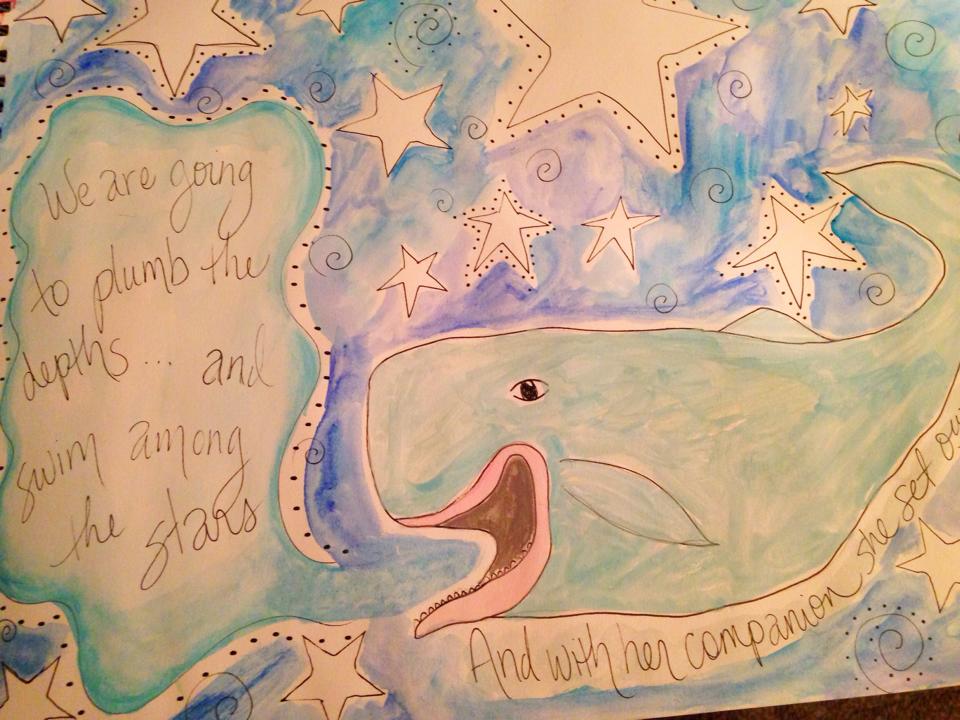
It has grown more obvious to me how, when I am closed off and in task master mode, that I can be oblivious to noticing the nuances of spirit.  When I slow down and open myself to creative spirit the influx of synchronistic images or words can be profound.  In January and February I had felt like I needed a break from any new commitments and had abstained from taking any on-line courses.  I was still in the mode of not taking anything new, but at the last minute I signed up for The Daring Tail course, which started on March 1st.  There is a theme regarding mermaids and sea life in this course.  Once I was signed up I had several occasions to note that mermaids and sea life images had been showing up around me for several weeks, but that I had not noticed.  A couple of weeks into the course I also remembered how I had just read the novel The Mermaid Chair by Sue Monk Kidd only a couple weeks prior.  Even in the prior December Storywalking course I was astonished when flipping back a few journal pages to discover the funky mer-creature I had drawn, as well as my companion animal from a guided meditation, which was none other than a whale who had a very specific message for me: “We are going to plumb the depths…and swim among the stars.”

Plumb the depths

Lastly, one other way this past year that I have seeked out greater vision and communion with spirit, has been by participating in a personal Vision Quest with a spirit guide.  One of the inspirations for the journey is the book The 13 Original Clan Mothers, by Jamie Sams. Each month I am to read the assigned chapter and create my shield.  My shields took the form of prayer flags and that particular vision came to me the first day I spoke with my spirit guide.  There are also additional monthly assignments to complete.  The journey began last June and will come to a conclusion at the end of my 13th month. I will admit that sometimes I have felt like throwing in the towel. Sometimes I have felt like an imposter.  Sometimes I have questioned if I am doing enough and/or doing it right.  Yet I have committed to the journey and have grown to embrace that it is mine and is not to be compared to the journey of another.  This Vision Quest has also pushed me to reside in a space of greater spiritual reflection.  

Storyteller ~ my first prayer flag from June 2013.

What are some ways that you stay connected to source?

Do you have regular creative practices that
feed your soul and keep you inspired?

Have you ever noticed that if/when you drift away
from doing those things that feed your soul
that you start to feel down, blue and disconnected?

Any words of wisdom about how to keep your soul fire burning bright?

“Looks Far Woman is the Clan Mother who is the
Guardian of the Fourth Moon Cycle, which falls in April.  
The full spectrum of pastel colors is connected to the
Clan Mother’s cycle, because she carries the
Medicine of Prophecy, see the truth in all colors.  
She is the Doorkeeper of the Crack in the Universe
and the Golden Door of Illumination that
leads to all other dimensions of awareness.  
She stands at the Crack in the Universe
and safely guides all human spirits taking Dreamtime journeys
into the other realms and then, back home,
being present and fully conscious of their bodies.

This Clan Mother is a Seer, an Oracle, a Dreamer, and a visionary.
She teaches us the validity of our impressions, dreams, visions
and feelings as they exist within our inner potential.
Looks Far Woman instructs humankind on how to unravel
the symbols found in psychic impressions.
She shows us how to see the truth in every vision we receive
in the tangible and intangible worlds.
In her wisdom, Looks Far Woman assists every seeker
in finding the seeds of personal and planetary prophecy
that the Great Mystery planted inside all human beings.”

~ Jamie Sams from The 13 Original Clan Mothers

Mojo Monday ~ Scheduling Joy and Growing Your Soul

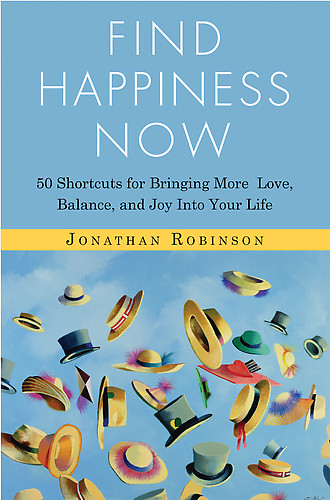
Find Happiness NowIs your calendar full?  Do you wake up thinking about the things that have to get done?  Does your chore list seem a mile long?  In the midst of the laundry, taking the kids to softball practices, doing your time in the 8 to 5, feeding the pets and making meals, have you scheduled joy into your day? Jonathan Robinson, author of Finding Happiness Now: 50 Shortcuts for Bringing More Love, Balance and Joy Into Your Life has some ideas and recommendations for getting happier and one involves actually scheduling joy into your life just as you would a doctors appointment or a meeting at work.

What if you aren’t clear on what brings you joy?  Jonathan Robinson recommends writing out a Pain and Pleasure List (PPL).  The PPL is a list of at least 10 things that you enjoy doing and and a list of 10 things you don’t particularly care for.  He states the point is to clarify what really turns you on in life and what you do only because you have to  — or think you should.

As an example he shares a list that a client completed when given this assignment.  Here is the clients lists:

Ten Things I Don’t Like To Do

Go to work
Market myself or my products
Clean the house
Cook
Be around disagreeable people
Spend time with my parents
Taxes and paying the bills
Give my wife a massage
Go shopping for clothes or gifts
Argue with my wife

Ten Things I Love To Do

Ride my bike
Be by myself, reading a good book
Play with the dog
Eat good food
Travel
Get a massage
Spend time in nature
Make love with my wife
Drive & listen to music
Watch a good football game

more joy and laughterThe author then shared that after his client completed his list he asked him to estimate the number of hours every month he spent doing each activity.  Jonathan writes “When he finished this part of the exercise, it was brutally clear why he was depressed, stressed and messed-up with his wife.  The total number of hours on the ‘pain’ side of the list was a whopping 215 hours per month.  The total number of hours on the pleasure side of the list was a meager thirty-two hours a month.  That’s almost a seven-to-one ratio of pain to pleasure.  I’ve found that when the degree of pain compared to pleasure rises above a five-to-one ratio people dislike their life.  In order to feel good again, such people need to spend less time doing ‘painful’ activities and more time doing what they enjoy.”

The author then adds for his readers “The first key to changing your life and behaviors is to be aware of whats currently not working.  If after completing your own PPL, you see a similar pattern to James’ then you’ll now you’ve been denying yourself too much.  You need to put pleasurable activities at a greater level of importance in your life.”

Take some time right now to complete your own PPL List.  I’ll complete one too.

Ten Things I Love To Do

Read (extra bonus points if it is in a hot bath)
Be in nature and soak in the beauty
Take photos of things that make me happy
Laugh
Listen to music with positive lyrics
Play/do something fun with the family
Create (paint, draw, make collages)
Share juicy and uplifting conversations
Feel connected to others/nurture relationships
Eat/drink something delicious that also enhance my health & vitality
Ten Things I Don’t Like To Do

Clean the cat box
Be in a cluttered and messy living space
Cook after a long day at work
Have too much work to complete in a day
Deal with technical difficulties
Be overbooked
Fall behind on writing deadlines
Listen to complaining
Experience conflict or be around conflict
Take care of sick people

Add some of the things on your Things I Love To Do list to your calendar, be it techy style in Outlook or iCalendar or the old fashioned paper one hanging on your well.  How did it feel to add these onto your calendar?  Does becoming more conscious of making time for joy shift anything?

How about growing your soul while also making time for more joy?  Does the concept of growing your soul sound daunting, challenging or even painful?  I have some good news.  According to Kurt Vonnegut growing your soul can be both simple and fun.

Kurt Vonnegut quote

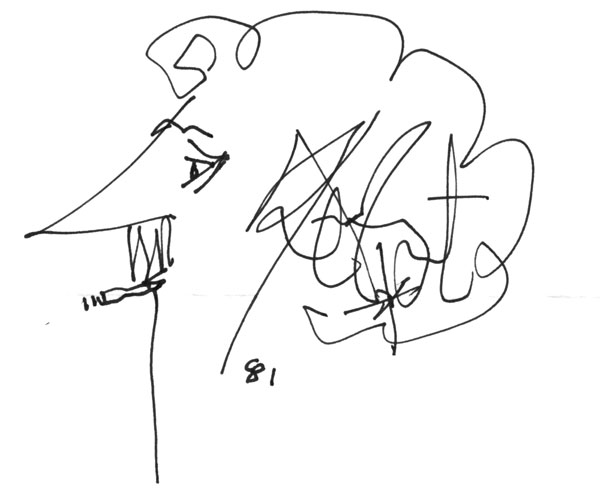
In 2006 Ms. Lockwood, an English teacher at Xavier High School, asked her students to write a letter to a famous author. She wanted them to discuss the author’s work and ask for advice.  Kurt Vonnegut (1922 – 2007) was the only one to write back.  He even signed off with a drawing.

Dear Xavier High School, and Ms. Lockwood, and Messrs Perin, McFeely, Batten, Maurer and Congiusta:

I thank you for your friendly letters. You sure know how to cheer up a really old geezer (84) in his sunset years. I don’t make public appearances any more because I now resemble nothing so much as an iguana.

What I had to say to you, moreover, would not take long, to wit: Practice any art, music, singing, dancing, acting, drawing, painting, sculpting, poetry, fiction, essays, reportage, no matter how well or badly, not to get money and fame, but to experience becoming, to find out what’s inside you, to make your soul grow.

Seriously! I mean starting right now, do art and do it for the rest of your lives. Draw a funny or nice picture of Ms. Lockwood, and give it to her. Dance home after school, and sing in the shower and on and on. Make a face in your mashed potatoes. Pretend you’re Count Dracula.

Here’s an assignment for tonight, and I hope Ms. Lockwood will flunk you if you don’t do it: Write a six line poem, about anything, but rhymed. No fair tennis without a net. Make it as good as you possibly can. But don’t tell anybody what you’re doing. Don’t show it or recite it to anybody, not even your girlfriend or parents or whatever, or Ms. Lockwood. OK?

Tear it up into teeny-weeny pieces, and discard them into widely separated trash recepticals. You will find that you have already been gloriously rewarded for your poem. You have experienced becoming, learned a lot more about what’s inside you, and you have made your soul grow.

God bless you all!

Kurt Vonnegut

kurt-vonneguts-signature

Right now let’s do Kurt Vonnegut’s assignment and write a six line poem.  Keep it simple and easy and just see what flows out.

Did you learn anything new about yourself after completing your poem?  Was there a message from your soul?

Mojo Monday ~ What Do You Want to Feel?

what do you want to feel

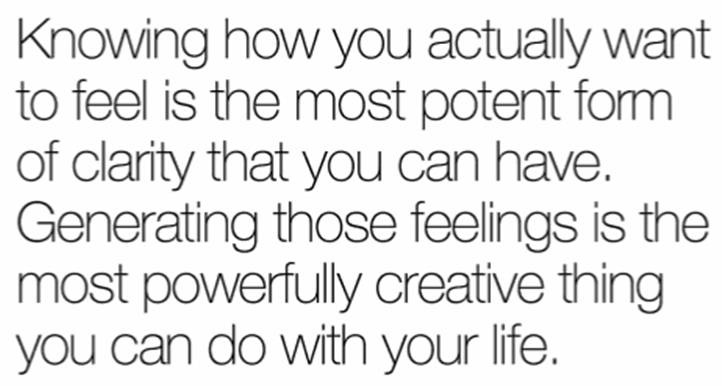
“When you lean into your desires, you liberate your power – and your joy.”
Danielle LaPorte

I have been contemplating the question “What makes me happy?” for a few weeks now.  I have a Mojo Monday writing partner though her articles only appear on the Cosmic Cowgirl member sites, where my Mojo Monday musings also get posted.  Trish O’Malley has been brilliantly covering the topic of happiness for a couple of weeks now.  What I shared after her last post was the following:

“I read the intro to Danielle LaPorte’s book called The Desire Map on Amazon for the first time a week or so ago. It really stuck with me when she shares how she and her former husband were making lists about things they wanted in their lives.  And how it was a great aha moment when they suddenly realized that it wasn’t so much the things, but the feelings they were hoping to attain.  She shared how that shifted their list.”
Desire Map
Danielle then goes onto list the words that flowed forth and the ensuing conversation:
 
Freedom!
Abundance.
Sexy.
Earth. Nature. Eco-love.
Connected.
Creative.
Temple.
True love.
Desire Map 2
 
The posts on happiness by Trish and checking out the contents of the book The Desire Map was timely for me.  My home life is good.  My hubby and I are in a really good place with one another.  My twin daughters are almost eight years old and are such a total joy.  They are fun and blossoming in so many ways.  I love coming home to them and spending time together as a family.
 
Where I am struggling is in my professional life.  At the end of March my 10 year anniversary with the agency I work for will come to pass.  10 years.  It kind of blows my mind that I have been doing this job for 10 years.  I still hold such deep gratitude for all I have learned and how my life has been enriched doing work that makes a positive difference in the world.  My peers for the most part are all social workers who have masters degrees or who have gone onto get licensed.  It has been a beautiful fit for me because I do have the soul and spirit of a social worker.  Recently when I took one of those Facebook quizzes about which career would be best for me the answer was Humanitarian, and it listed social worker for a career.  (You can find the quiz here if you would like to take it too.)
 
While I may have the soul of a social worker I don’t have a social worker degree, though I wish I would have been better informed about my options in college.  Instead I have a degree in History, another in French, along with a minor in English and certificates in editing and publishing.  My creativity, organizational strengths and technology skills have served me well in administrative and office manager jobs in printing, education and then social services.
 
For a number of months I truly have been making myself miserable and sad with my own thoughts about success/lack of success and so on.  I have had this storyline stuck in a loop-feed in my head about my being 44 years old and only making “X” amount of money.  This partly surprises me because I have never been about the money.  However, I know that tied up in this is feeling like I have hit the ceiling in my current position.  Not to mention that I have also been in limbo for many months in regards to where a writing project might be leading.  Waiting, when it could likely end with rejection, has been stressful.  (Note to self ~ I really need to work on more letting go and anxiety/stress-relieving techniques. Perhaps re-read my own post about anxiety that can be found here.)  
 
In exploring the topic of what do I want, I am now asking the more important questions regarding what makes me happy and what do I want to feel.  I have been setting my sights on getting clearer on what makes me sad/angry/frustrated/stressed, and then even more importantly what makes me feel happy and inspired. I think starting there will be a key ingredient to choosing and creating more happiness.  I believe those answers can help me make some decisions about the future of my writing and art, my creative dreams/goals and my professional aspirations.  
Desire Map 3
 How do you want to feel in your life?
What makes you happy?
What makes you feel inspired?
Does writing a list and getting clear
on those answers shift things for you?
happiness
Want to do some explorations of the soul? Consider joining a course with Jenafer Owen that begins March 3rd called A Very Daring Tail.

Manifesting In A Wonderland

CC Magazine Logo (1)

Today in Cosmic Cowgirls Magazine
is my latest article called
Manifesting In A Wonderland

My enthusiasm for bright new ideas and plans for the future has been lagging lately.  This didn’t bode well as I began to try and figure out what I would write about the topic of Manifestation.  In light of my floundering I found myself googling “What if you don’t know what you want to manifest?” except that I somehow typed it wrong and wrote “What if you don’t know what you have to manifest?” The change from want to to have to gave the question a whole new energy. I laughed a little and looked up and asked the Universe, “What is it that I have to manifest?”

wonderland image as seen on essencejoyclairvoyance.com

Mojo Monday ~ SHE: A Celebration of Greatness In Every Woman

photo (3)

SHE ~ She Harnesses Everything

SHE is a book of qualities illustrating the greatness and strength of all women.  From ‘everywoman’ to exemplars Madame Secretaries Hillary Clinton and Madeleine Albright, to visionary artist Shiloh McCloud and poet Maya Stein, these woman represent the very best in the human spirit.  Author-artists Mary Anne Radmacher and Liz Kalloch have gathered these fierce and fiesty females along with their best advice for our life’s journey on the topics of leadership, friendship, adventurousness, collaboration, risk-taking, happiness, compassion and much more.  With words of wisdom from Madeleine L’Engle, Laura Schlesssinger, Rachel Carson, Oprah Winfrey, Harper Lee, Lucille Ball, Cheri Huber, Julia Child, Drew Barrymore and many others.”

The book SHE: A Celebration of Greatness In Every Woman is a work of art. Each page is richly designed enhancing the beauty and power of the words that were written by authors Mary Anne Radmacher and Liz Kalloch.  This work of art also includes words of wisdom from Shiloh McCloud, Hillary Rodham Clinton, Deanna Davis, Jennifer Louden, Christine Mason Miller and more.

I can recall how in January of 2013 Mary Anne Radmacher emailed me asking if I might be able to give her Shiloh McCloud’s private email address, as she wanted to contact her about a particular project.  I knew Shiloh wouldn’t mind so I shared it with her.  Later that same day I heard back from both Mary Ann and Shiloh about their delightful exchange regarding this very book project. Here it is finally in all its glory.

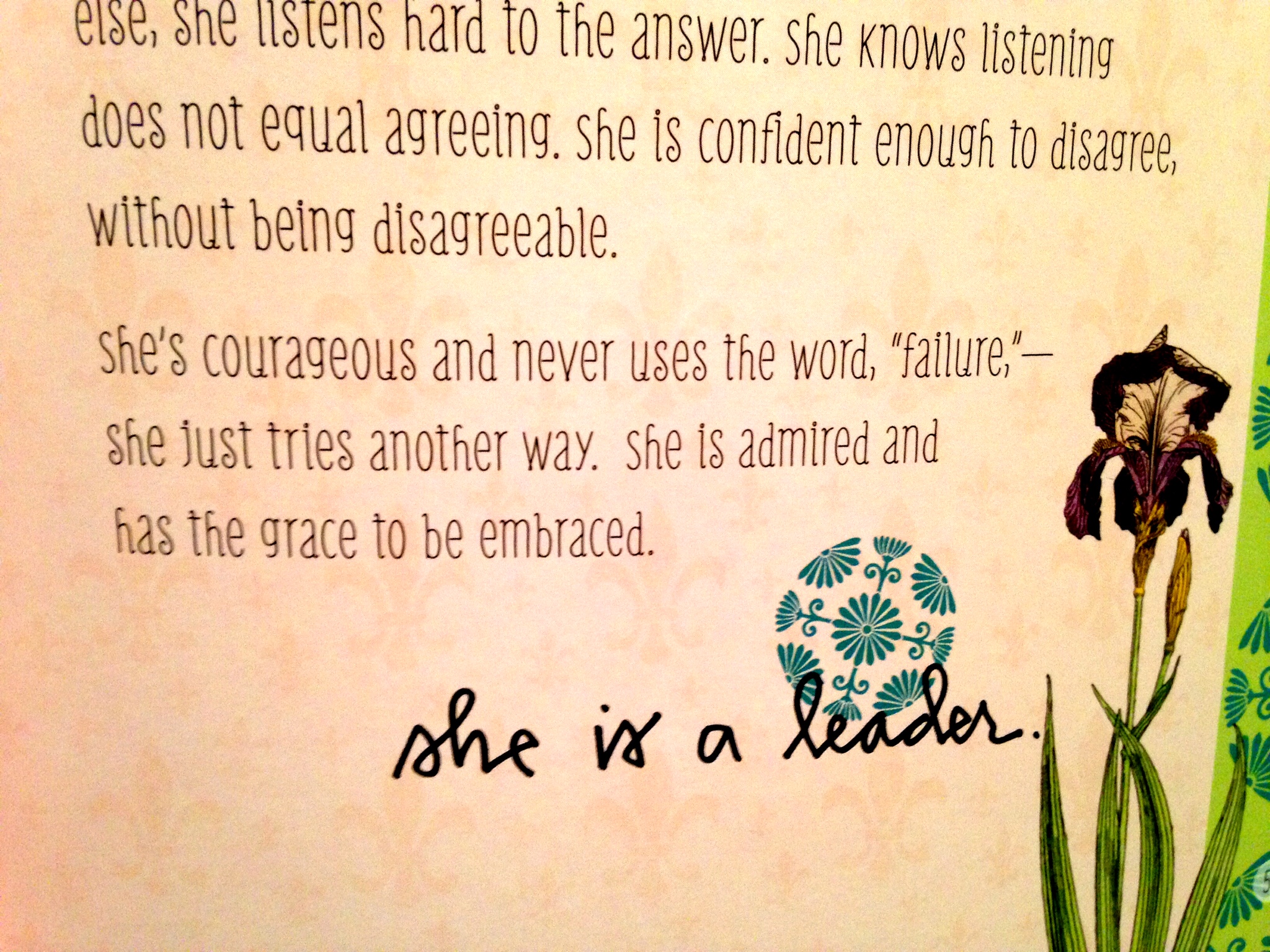
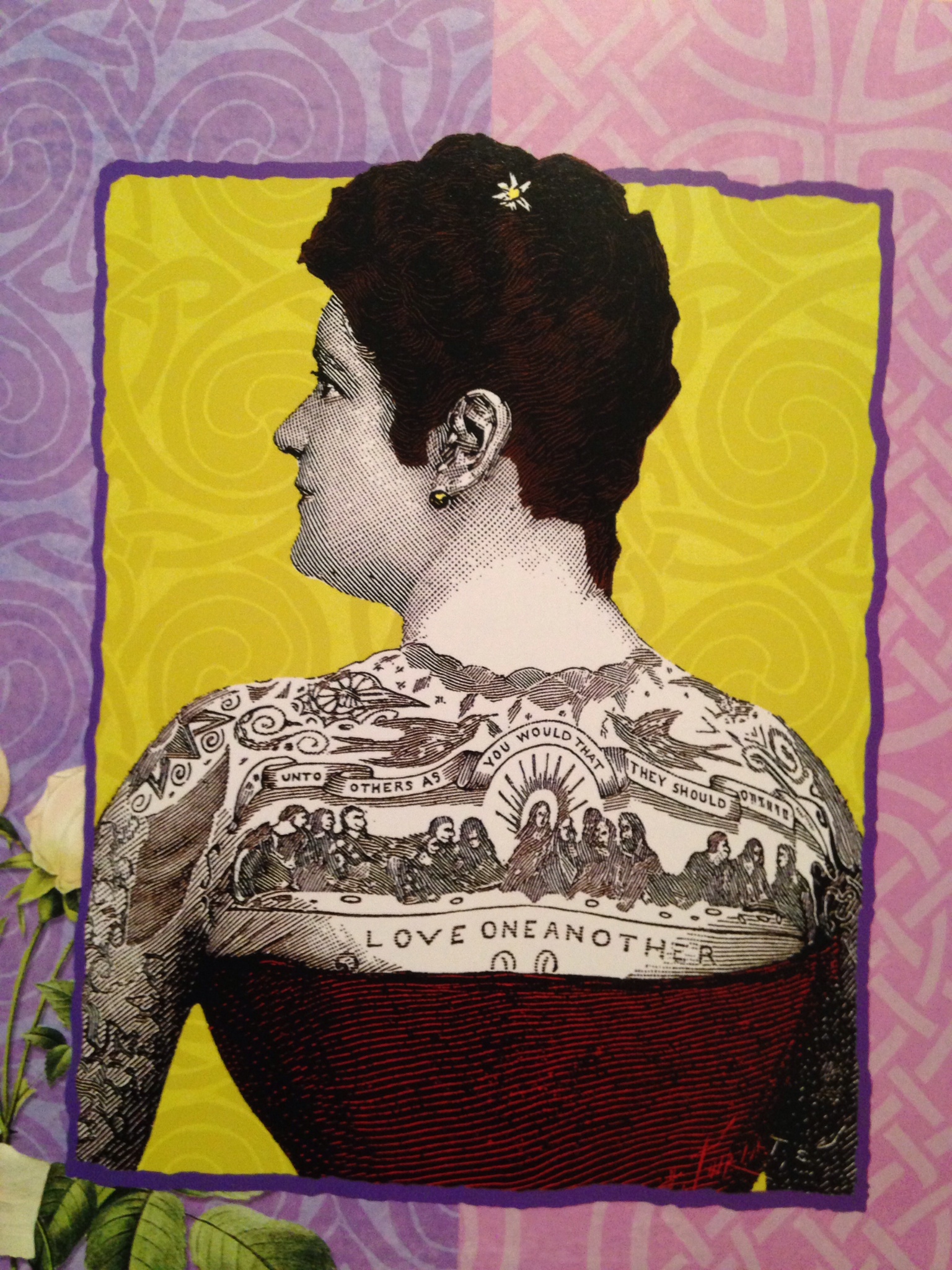
My friend and Cosmic Cowgirl tribe chief Shiloh was selected as the representative for the Mystical in the book. Here are a few images from the book for this particular topic.

IMG_0009_2

IMG_0011_2

IMG_0012_2

There are so many more brilliant words of wisdom in the book.  More quotes to inspire.  More image and designs to please the eyes.  It is a feast for the senses.  The only thing missing is a musical soundtrack to accompany the book.

Here are some more images and quotes from the book to enjoy.

IMG_0017_2

IMG_0013_2

IMG_0010_2

IMG_0014_2

IMG_0018_2

IMG_0007_2

IMG_0002_2

Authors Mary Anne Radmacher and Liz Kalloch are about to begin a tour with their new book.

One of the big book events is taking place on March 8th
from 10:00 am to 3:00 pm in Napa, CA

Here are more details:
Celebrate International Women’s Day in a festival-like atmosphere!
Join inspirational author Mary Anne Radmacher and artist/co-author Liz Kalloch
sharing their new book, She: A Celebration of Greatness in Every Woman,
as well as Dr. Rhea Zimmerman (producer and director of Love Bomb The Movie
and local author Pam Burns-Clair, MFT
(We Who Took a Leap – From Where Our Mothers Left Off),
followed by lunch (which may be purchased),
book signing, wine tasting, local entertainment and
a room filled with inspirational women sharing
their unique talents/contributions in our community.
This event is FREE to both participants and the public.

SHE Gathering March 8th

Visit the Facebook page for the book SHE here.

You can find Mary Anne Radmacher on Facebook here.

Liz Kalloch is on Facebook here.

Lastly you can also find cards (even SHE cards) and prints by
Mary Anne Radmacher and Liz Kalloch
at a web site called Applied Insight.

deannardavis-8c8430f6-9678-4eb0-821a-b555a86efd4e-v2

She Nurtures Greeting Card (She)
“She nurtures. She gardens.
She calls her friends to play in the fields of excellence.
She commands respect by never demanding it.
She grows all kinds of goodness. She lives with intention.”

Mojo Monday ~ What We Can Learn from Anger

 
This particular article first appeared in my blog back in December of 2008.  I chose to share it again as I have been struggling with increased feelings of frustration and anger in recent months.  I decided to revisit this topic in an effort to contemplate and evaluate my own feelings.  I thought it might be of value to you too.


Anger is an emotion that is often viewed as negative and in some religious circles as sinful even. Yet anger is a human emotion, just like fear, happiness and sadness. Should anger be suppressed or ignored? What do we do with this emotion?

Let us consider a few individuals who are recognized for their contributions to peace. The idea of a person being both peaceful and angry may seem contradictory and incompatible. Yet I believe it is helpful and even encouraging for anyone who struggles with being angry to recognize that even some of the most peaceful people to walk this earth have experienced anger and expressed it.

Jesus
When Jesus cleared the temple of the moneychangers and animal-sellers, He showed great emotion and anger (Matthew 21:12-13; Mark 11:15-18; John 2:13-22). Jesus’ emotion was described as “zeal” for God’s house (John 2:17). Another time Jesus showed anger was in the synagogue of Capernaum. When the Pharisees refused to answer Jesus’ questions, “He . . . looked round about them with anger” (Mark 3:5). This verse goes on to give the reason for His anger: “the hardness of their hearts.”


Mahatma (Great Soul) Mohandas Karamchand Gandhi (1869-1948)

“I have learnt through bitter experience the one supreme lesson to conserve my anger, and as heat conserved is transmuted into energy, even so our anger controlled can be transmuted into a power which can move the world. It is not that I do not get angry. I do not give vent to anger. I cultivate the quality of patience as angerlessness, and, generally speaking, I succeed.… It is a habit that everyone must cultivate and must succeed in forming by constant practice.”


Mother Teresa

“When I see waste here, I feel angry on the inside. I don’t approve of myself getting angry. But it’s something you can’t help after seeing Ethiopia.” — Washington 1984.


Daisaku Ikeda (January 2, 1928-)

Ikeda is President of Soka Gakkai International (SGI), a Buddhist association which claims 12 million members in more than 190 countries and territories, and founder of several educational, cultural and research institutions. Ikeda is a peace activist, prolific writer, poet, educator, interpreter of Nichiren Buddhism and environmentalist. He has travelled to more than 60 countries to hold discussions with many political, cultural, and educational figures, as well as to teach. In his book For the Sake of Peace Ikedawrites in the preface “I am against war! I am absolutely opposed to it!” He continues on later with “I am determined to fight against anyone who supports or advocates war. I will fight the dark, demonic forces of destruction. Another book by Ikeda called Fighting for Peace is a collection of his meditations on war and peace. In a description from his own web site the book is described as expressing, from personal experience, his deep loathing of war and his anger at those in positions of authority who would sacrifice ordinary people in pursuit of selfish ends.

In learning to better embrace and accept myself, I have needed to recognize and accept my anger and even my rage. This has been a huge part of growing and becoming more authentic and real. I grew up repressing any anger I felt. Scary feelings like anger were stuffed away and suppressed. My fears of “rocking the boat” and of not being liked felt very overpowering. There is no doubt that I had the people-pleasing disease.

The book Quantum Wellness: A Practical and Spiritual Guide to Health and Wellness by Kathy Freston addresses anger and I had one of those “Aha moments” upon reading this section this summer.

Freston writes, “According to Dr. John Sarno, the emotion we are most averse to is rage, anger that has gathered steam from being kept down and locked away. A lot of people who think of themselves as good people — Sarno called them “goodists,” because they tend to be very much tied to an image of themselves as nice and good people — do not at all feel comfortable with such a “distasteful” and potentially out-of=control emotion as rage. If something happens in their life that sparks intense anger, these people tend not to deal with it, because they don’t like what it brings up in them…

…A goodist might well submerge his true feelings because he doesn’t want to rock the boat. He convinces himself that he has “let it go” when, in fact, by not allowing himself to experience his authentic emotions, they have just done unconscious. When we don’t think we can handle something in a way that feels safe and manageable -ie., if we speak up, we might lose a relationship or job or, even worse, be thought of as a bad person — our survival mechanism kicks in and buries the feeling in the recesses of our psyche. Those disowned feeling become part of our shadow.”

The book then delves into how suppressing the shadow becomes the goal. “As Dr, Sarno put it, the brain is in cahoots with the body in such a way that when the repulsive emotion starts to come up, the body will quickly conjure an intense localized pain or discomfort that is big enough to make us forget what we were beginning to feel. Basically, the brain says, “Whoa! I can’t let myself feel that rage. It threatens my identity as a good and nice person. Good and nice people do not have rage; it is unseemly and out of control.” The book points out that the mind and body will work together to save us from disturbing experiences. It also points out that since we prefer to see ourselves in a certain light “we tuck away what we think is repulsive or frightening or disagreeable. But, because or nature is to evolve and become ever more enlightened, the part of us that is dark will constantly try to come to light.”

Further on the author explains that “Once we make peace with our demons — be they rage or fear or shame, and we all have them — we become more fully integrated human beings…

…When you go about this process of allowing your emotions without judgment, you will be led into your Truth. Ask yourself if there is anger — rage even — that you need to connect with and then heal. Allow yourself to drop into deep sadness or grief even if your normal instinct is to pull yourself up by the bootstraps and “get over it.”

Ironically I also came across a wonderful section on anger in The Artist’s Way: A Spiritual Path to Creativity by Julia Cameron. I say “ironically” because here is a book about creativity. Yet really this book is about so much more.

“Anger is fuel. We feel it and we want to do something. Hit someone, break something, throw a fit, smash a fist into the wall, tell those bastards. But we are nice people, and what we do with our anger is stuff it, deny it, bury it, block it, hide it, lie about it, medicate it, muffle it, ignore it. We do everything but listen to it.

Anger is meant to be listened to. Anger is a voice, a shout, a plea, a demand. Anger is meant to be respected. Why? Because anger is a map. Anger shows us what our boundaries are. Anger shows us where we want to go. It lets us see where we’ve been and lets us know when we haven’t liked it. Anger points the way, not just the finger. In the recovery of a blocked artist, anger is a sign of health.

Anger is meant to be acted upon. It is not meant to be acted out. Anger points the direction. We are meant to use anger as fuel to take the actions we need to move where our anger points us. With a little thought, we can usually translate the message that our anger is sending us.

‘Blast him! I could make a better film than that!’ (This anger says: you want to make movie. You need to learn how.)

‘I can’t believe it! I had this idea for a play three years ago and she’s gone and written it.’ (This anger says: stop procrastinating. Ideas don’t get opening nights. Finished plays do. Start writing.)

‘That’s my strategy he’s using. This is incredible! I’ve been ripped off! I knew I should have pulled that material together and copyrighted it.’ (This anger says: it’s time to take your own ideas seriously enough to treat them well.)

When we feel anger, we are often very angry that we feel anger. Damn anger!! It tells us we can’t get away with our old life any longer. It tells us that old life is dying. It tells us we are being reborn, and birthing hurts. The hurt makes us angry.

Anger is the firestorm that signals the death of our old life. Anger is the fuel that propels us into our new one. Anger is a tool, not a master. Anger is meant to be tapped into and drawn upon. Used properly, anger is use-full.

Sloth, apathy, and despair are the enemy. Anger is not. Anger is our friend. Not a nice friend. Not a gentle friend. But a very, very loyal friend. It will always tell us when we have been betrayed. It will always tell us when we have betrayed ourselves. It will always tell us that it is time to act in our own best interests.”

Anger is not he action itself. It is action’s invitation.”

I also found wisdom about anger in Ed and Deb Shapiro’s article entitled “Ducks Don’t Do Anger” which appeared in the October 30, 2008 issue of the Huffington Post. They write “Trying to eradicate anger is like trying to box with our own shadow, it doesn’t work. Getting rid of it implies either expressing it and creating emotional damage, or repressing it, which just suppresses it until it erupts at a later time. Getting to know and make friends with anger is essential. To make real change we have to change the way we think and react. This is growing roses out of rotting compost, transforming fire into constructive action, using the passion but without the destruction. We need to see what is beneath the anger, what hurt, longing or fear is trying to make itself heard. There may be feelings of rejection, grief or loneliness, so if we repress anger or pretend it isn’t there then all these other feelings get repressed and ignored as well.”

What I have certainly learned from my explorations of facing my own anger and rage is how self destructive this emotion can be if it is suppressed, stuffed and pointed inwards. I am not one to lash out. I have always been one to internalize such feelings. The “goodist” in me was always so afraid of conflict and confrontation. The difficult lesson has been in learning how to constructively communicate my anger in a healthy way. If something upsets me or makes me angry I am learning to make better choices in expressing it. Usually for me it is as simple as speaking up. For example I have learned that telling my husband that I am upset that he didn’t help out in the morning is a much healthier approach, than is harboring my anger which doesn’t resolve anything. It is only by speaking up respectively and sharing my thoughts and feelings that he understands what I am thinking and how I am feeling. Only then can he respond and perhaps do something differently.

Activity ~ Make a list of things that make you angry. Include anything and everything. Here is an example:

Rude drivers

Toilet seat left up

Slow computer

Kids whining and arguing

Television on too loud

Getting to work late

Being interrupted by your spouse or children

Waiting in line

Next review the list and consider why these things make you angry. Sometimes what we think is making us angry, really isn’t the real culprit. Let’s consider rude drivers and toilet seats left up. The key here might be that you are angry that people are not considerate of others. Ask yourself if you are wanting and needing more consideration in your life from your family, your friends and perhaps most of all from yourself. The slow computer might really be more of a reflection of your frustration with not having enough time, or rather feeling like you don’t have enough time. Perhaps you need more “you” time. More time to just be and relax. How can you schedule back and make that happen? If the anger kicks in due to kids whining and arguing, the television being on too loud, and being interrupted by a spouse and children, this could also be a sign that you are in need of more silence in your life and again more private time.

Suggested Reading ~ The Dance of Anger: A Woman’s Guide to Changing the Patterns of Intimate Relationships by Harriet Lerner, Ph.D.

Here is a long excerpt from the beginning of Chapter 1 entitled The Challenge of Anger

“Anger is a signal, and one worth listening to. Our anger may be a message that we are being hurt, that our rights are being violated, that our needs or wants are not being adequately met, or simply that something is not right. our anger may tell us that we are not addressing an important emotional issue in our lives, or that too much of our self–our beliefs, values, desires, or ambitions–is being compromised in a relationship. Our anger may be a signal that we are doing more and giving more than we can comfortable to or give. Or our anger may warn us that others are doing too much for us, at the expense of our own competence and growth. Just as physical pain tells us to take our hand off the hot stove, the pain of anger preserves the very integrity of our self. our anger can motivate us to say “no” to the ways in which we are defined by others and “yet” to the dictates of our inner self.

Women, however, have long been discouraged from the awareness and forthright expression of anger. Sugar and spice are the ingredients from which we are made. We are the nurturers, the soothers, the peacemakers and the steadiers of rocked boats. It is our job to please, protect and placate the world. We may hold relationships in place as if our lives depended on it.

The taboos against our feeling and expressing anger are so powerful that even knowing when we are angry is not a simple matter. When a woman shows her anger, she is likely to be dismissed as irrational or worse.

Why are angry women so threatening to others? If we are guilty, depressed, or self-doubting, we stay in place. We do not take action except against our own selves and we are unlikely to be agents of personal and social change. In contrast, angry women may change and challenge the lives of us all, as witnessed by the past decade of feminism. And change is anxiety-arousing and difficult business for everyone, includingthose of us who are actively pushing for it.

Thus, we too learn to fear our own anger, not only because it brings about the disapproval of others, but also because it signals the necessity for change. We may begin to ask ourselves questions that serve to block or invalidate our own experience of anger: ‘Is my anger legitimate?’ ‘Do I have a right to be angry?’ ‘What good will it do?’ These questions can be excellent ways of silencing ourselves and shutting off our anger.

Let us question these questions. Anger is neither legitimate nor illegitimate, meaningful nor pointless. Anger simply is. To ask, ‘Is my anger legitimate?’ is similar to asking, ‘Do I have a right to be thirsty?'”

Can You See Me?

CC Magazine Logo (1)


Today in Cosmic Cowgirls Magazine
is my latest article called

Can You See Me

One of the more powerful and moving experiences of my life was at a Cosmic Cowgirl member conference two years ago.  One of our leading members, Carmen Baraka, led us through a beautiful ceremony that involved each of us standing face-to-face with another member, while holding hands and gazing into one another eyes.  The words we then spoke from the heart were “I see you.  You are my sister.”   We then moved down a person and repeated the same actions and words. There was a great deal of emotion in the eyes and voices of each woman, some who may have only met for the first time that weekend.  Yet,  for me in that moment, I felt like we were really seeing past all the exterior masks, that the veils had been lifted, and we were seeing into the very souls of one another.  I felt deeply moved by the experience and wished for all of humanity to connect in that soul to soul way, as it was healing and inspirational.

Click this link Can You See Me or the one above to visit Cosmic Cowgirls Magazine to read the full article.


Mojo Monday ~ Creative Anxiety

anxietygirl

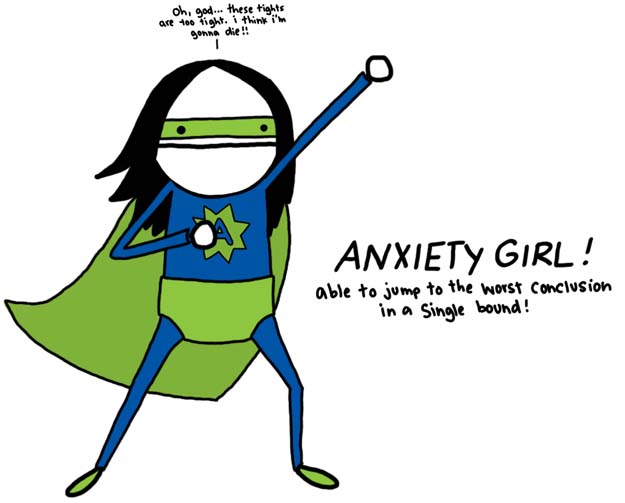
Are you every plagued by creative anxiety? I know that I am at times transformed into Anxiety Woman.  My anxiety levels have grown due to stresses at the day job last year, taking determined steps forward in pursuing the dream of getting published, as well as offering some of my art and photographs for purchase via Fine Art America.

My anxiety can also grow more pronounced if I am struggling with my writing or coming up with the right approach for my monthly article for Cosmic Cowgirls Magazine.  If my deadline is looming, or has come and gone, then the anxiety really starts to squeeze me in its grips.  Occasionally I wonder why I continue to put myself through it all, yet I know that creating artistically and writing are two of the key things that feed my soul and are positive things that I contribute to this world.  Yet, there are still times where I fear that all my endeavors may be for naught.

I have also had unusually high day job stresses this past year.  I also know that there are things I can do, and could be doing more, to help relieve the anxiety and stress that is part of creating and living life.  Sometimes I do those things, such as get plenty of sleep, eat well and exercise.  Yet, if I get into a loop of being tired, not exercising regularly and I stress eat on top of it, then the cycle becomes quite vicious and I feel less healthy and unable to cope with the pressures.  This pattern has been going on for several months now and went seeking some new inspiration.  I found some in a book written by an author who has done extensive writing on the subject of creativity,
artistanxiety2

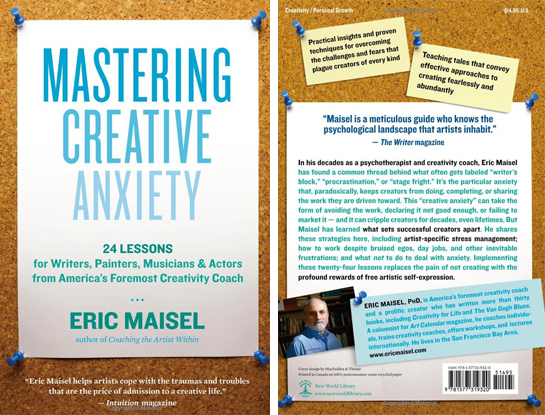
In the book Mastering Creative Anxiety: 24 Lessons for Writers, Painters, Musicians and Actors from America’s Foremost Creative Coach, author Eric Maisle, PhD shares insight from his many years as a psychotherapist and creative coach to tackle the subject of creative anxiety.  Maisle begins right in the introduction by asking a series of questions.

Are you creating less often than you would like?
Are you avoiding your creative work altogether?
Do you procrastinate?
Do you resist getting to your work or marketing your work?
Do you have trouble deciding which creative project to tackle?
Do you find completing work hard?

He then shares that anxiety may be the culprit.  He writes “Anxiety regularly stops creative people in their tracks and makes their experience of creating more painful than pleasurable.  It stops would-be creative people entirely, preventing them from realizing their dreams.  Anxiety is the number one problem that creative people face –and yet few even realize it.”  Fortunately Maisle wrote his book with the intention of offering anxiety management techniques and strategies to help readers learn to manage their anxiety skillfully and realistically.

The book includes 24 chapters focused on different types of anxiety that may affect the creative person and process.  Here is the comprehensive list of topics:

The Anxiety of…

Creating and Not Creating
Mattering and Not Mattering
Identity
Individuality
Choosing the Creative Life
Surviving
Day Jobs
Choosing
Compromising
Possibility
Working
Thinking
Ruining
Failing
Completing
Attaching and Caring
Ego Bruising
Performing
Selling
Promoting
Procrastinating
Waiting
Repeating
Success

Let me begin by sharing some excerpts from Chapter 1 – The Anxiety of Creating and Not Creating.

“Anxiety is part of the human condition.  and it is a much larger part than most people realize.  A great deal of what we do in life we do to reduct our experience of anxiety or to avoid anxiety altogether.  Our very human defensiveness is one of the primary ways that we avoid experiencing anxiety.  If something is about to make us anxious we deny it that it is happening, make ourselves sick so that we can concentrate on our sickness, get angry at our mate so as to have something else to focus on, and so on.  We are very tricky creatures in this regard.

We are also very wonderful creatures who have it in us to create.  Creativity is the word we use for our desire to make use of our inner resources, employ our imagination, knit together our thoughts and feelings into beautiful things such as songs, quilts, or novels, and feel like the hero of our own story. It is the way that we make manifest our potential, make us of our intelligence, and embrace what we love.  When we create, we feel whole, useful, and devoted.  Unfortunately, we often feel anxious as we create or contemplate creating.  There are many reasons for this — the subject of our twenty-four lessons.  We get anxious because we fear failing, because we fear disappointing ourselves, because the work can be extremely hard, because the marketplace may criticize us and reject us.  We want to create, but we also don’t want to create so as to spare ourselves all this anxiety.  That is the simple, profound dilemma that millions of people find themselves in.”

Here are some of the author’s initial thoughts on how to deal with creative anxiety:

“To create and to deal with all the anxiety that comes with creating, you must acknowledge and accept that anxiety is part of the process, demand of yourself that you will learn — and really practice! — anxiety management skills so that you can master the anxiety that arises, and get on with your creating and your anxiety management.  It is too tragic not to create if creating is what you long to do, and there is no reason for you not to create if ‘all’ that is standing in the way is your quite human, very ordinary experience of anxiety.  It is time to become an anxiety expert and get on with your creating!”

Eric Maisel then leads into special sections that appear in each chapter called Headline, To Do, Vow, Teaching Tale and Your Anxiety Mastery Menu. In the Headline the author boils the topic down into a concise focus.  That is followed by the To Do in which he gives clear instructions on an action or actions to take.  He then offers a Vow that the reader can apply with a personal focus.  The next to last section is the Teaching Tale in which a story illustrates the lesson of the chapter. The final section Your Anxiety Master Menu is where the author offers tools and reminders to really enacting changes that are anxiety reducers.

Let us review the Headline, To Do and Vow together for Chapter 1.

Chapter 1 – The Anxiety of Creating and Not Creating

Headline – “Since both creating and not creating produce anxiety in anyone who wants to create, you might as well embrace the fact that anxiety will accompany you on  your journey as a creative person — whether or not you are getting on with your work.  Just embracing that reality will release a lot of the ambient anxiety that you feel.  Since anxiety accompanies both states — creating and not creating — why not choose creating?”

To Do – “Pic your next creative project or return to your current one with a new willingness to accept the reality of anxiety.  To help reduce your experience of anxiety, remember to breathe deeply, speak positively to yourself, and affirm that your creative life matters to you.  If some anxiety remains, create anyway!”

Vow – “I will create, even if doing so provokes anxiety; and when it does, I will manage it through the use of the anxiety management skills and techniques I am learning and practicing.”

anxiety-image

The author Eric Maisle, PhD, has truly comprehensively covered the topic of creative anxiety in this book.  Here are some more insightful excerpts for you, along with some of his recommendations for handling the anxiety provoking situation.

Chapter 2 – The Anxiety of Mattering and Not Mattering

“The biggest challenge facing a creative person is keeping the belief firmly in place that what she is attempting matters to her.  A creative person’s main challenge is therefore existential; she easily loses the sense that what she is doing matters, given how hard it is to do the work well, how difficult the marketplace feels, and all the rest.”

Headline – “Anxiety arises in us when we fear that our efforts do not matter, and it arises in us when we do the creative work that matters to us.  Since anxiety will arise in either case, decide to do the work that matters to you, even if doing so provokes anxiety.”

To Do – “Opt to matter.  This is a decision, not a given! Decide to be the hero of your own story and to prove the exception by doing your creative work, despite your doubts, anxieties, and life’s difficulties.  Plan for your creative work, schedule your creative work into your daily routine (preferable first thing each morning), and do it despite your doubts about you, the marketplace, and the universe.”

Vow – “I matter, and my creative efforts matter.”

Chapter 3 – The Anxiety of Individuality

“Creativity is an expression of individuality, an expression of a person’s desire to manifest her potential, to speak in her own voice, to have her own opinions, and to do her own work.  What distinguishes the creative person from other people is her felt sense of individuality.  Many people are born conventional and find it easy to follow the crowd; only some people are born with a strong desire to assert their individuality.”

Headline – “When your sense of who you are does not match your sense of who you ought to be, you experience anxiety.  Become the person you long to see in the mirror, and match your reality to your vision of your authentic self.”

To Do – “Actively become your best version of yourself by working on your personality.  Begin by identifying the traits and qualities you want to shed and the traits and qualities you want to nurture.  Choose one from each list, and make a plan for eliminating the one and increasing the other.”

Vow – “I will strip away all the personality bits that are not me, add the traits that I need, and create and stand behind my authentic self.”

Chapter 7 – The Anxiety of Day Jobs

“A day job is a job whose primary meaning — or only meaning — is that it allows you to survive while you work on your are and your art career.  Some day jobs are satisfying in their own right, some are completely unsatisfying, some are more like second careers with their own perks and their own success ladder, and some are simple dead-end positions that go nowhere and aren’t meant to go anywhere.  What they all have in common, to lesser but often to greater degrees, is that they provoke their own special anxieties.

job anxietyFirst of all, they are jobs, with all the pressures that jobs entail…Second there is the worry — the anxiety — that you will have to work day jobs for a much longer time than you ever imagined, maybe forever.  You are banking on your creative efforts paying off, and the more it looks like you won’t be able to live on those creative efforts, the more the specter of day jobs remaining a central time-wasting, spirit-killing, mind-numbing part of your life grow.  It is one thing to work a day job at age twenty-four while you write your first screenplay.  It is quite another to work a day job at age forty-four as you struggle to fine the wherewithal to write your tenth screenplay after the first nine haven’t sold.  Day job anxiety are inextricably connected.  Your first day job will feel like a lark.  Will your twentieth?”

Headline – “Day jobs come with their own set of anxieties, from mean bosses to the experience of time being wasted.  Get ready.

To Do – “Think through the following interrelated three-part conundrum: 1) Should I work a day job and do any art I like, even art I know is unlikely to sell, hoping against hope that what I create will in fact be wanted? 2) Should I work a day job but do art that I think is likely to sell, so as to increase my chances of one day being able to give up my day job? 3) Should I choose a second career rather than a string of day jobs?  What are the pluses and minuses of each choice?”

Vow – “I will do my best to make sense of the role that day jobs play in my life — and if they must have a place, then I will effectively manage the anxiety that they invariable provoke.”

Chapter 11 – The Anxiety of Working

“Many different anxieties arise as we tackle our work.  The three main reasons that we experience so much anxiety as we do our creative work are 1) that our self-talk tend to let us down rather than support us, providing us with anxious-making ideas such as ‘I ca’t possibly pull this off’ or ‘I have not idea what I’m doing’; 2) that we doubt the quality of our work as we measure it against the very high standards of the art we love and as we strive to make it excellent; and 3) that the very nature of the creative process causes our work to morph before out eyes and comes with no guarantees whatsoever.  Our self-talk, our desire for excellence, and the process itself all make us anxious.”

Headline – “Creating makes us anxious.  There are countless reasons for this, so many reasons that if we laid them all out they would stretch from wherever you find yourself to the door of your studio.  Open that door anyway.”

To Do – Do you creative work, even if doing it makes you anxious.  Do not avoid it; do not talk yourself out of it; do not desire the process to be different from what it is.  Do the work directly in front of you; the work you want and ought to do.”

Vow – “I will do my creative work and forthrightly deal with any anxiety that arises.”

Chapter 14 – The Anxiety of Failing

“What fears are actually involved?  That you will be proven to have insufficient talent, that you will learn that you can’t trust your instincts and your choices, that you will be forced to live that other ‘real job’ life, and that your heart will be broken as your dreams go up in smoke.  No wonder you get anxious at the prospect of a project failing, and by extrapolation and implication, your entire creative life failing!”

Headline – “We hate failing, and our first line of defense against failing is not trying.  Do not go this route.  Rather, do your creative work and refuse to label any of your honest efforts as failures.”

To Do – “Really spend time with the cognitive idea of reframing.  You want to have a serious discussion with yourself about how to reframe the concept of failure so that the possibility of failure is either eliminated or at the very least greatly reduced.  This is not a linguistic game but you learning for yourself that, through lack of self-friendliness, you have misnamed certain events and called them failures when they were not.”

Vow – “I will do my work and not worry about failing.  In fact, I think I may just banish the word failure from my vocabulary.”

performance-anxietyChapter 18 – The Anxiety of Performing

“Performance — which includes the act of coming to the blank page or the blank canvas, as well as standing up in front of an audience — is a classic anxiety producer.  It is so potent an anxiety producer because it consists of a great many different fears: the fear of being seen as flawed, the fear of criticism, the fear of disappointing people, the fear of being in power, the fear of embarrassment and humiliation, the fear of imperfection, the fear of loss of control, and even more dramatic fears like the fear of loss of love and approval and the fear of annihilation.  Performance anxiety is made up of such a long list of fears that it is no wonder so many people dread performing.”

Headline – “Performance anxiety, because it is made up of so many pressing fears, afflicts almost everyone.  You can probably only avoid it by not performing: by not writing, by not painting, by not networking, by not getting up onstage.  Your best bet is to accept that it is coming and to prepare yourself.”

To Do – “Make sure you have at least one or two anxiety management techniques in place to deal with performance anxiety.  Two of the best in this regard are discharge techniques (such as silently screaming) and reorienting techniques (in which you move your attention away from the performance).  Choose your techniques, practice them, and make sure they work by using them in performance situations.”

Vow – “I will perform, even though performing makes me anxious.”

Chapter 19 – The Anxiety of Selling

“This selling provokes anxiety.  One way to deal with this anxiety is simply not to enter the fray.  This might sound like ‘I paint for myself’ or ‘I’ll find someone else to do the selling’ or ‘I don’t care who reads my writing — I do it for the process.’  Some people do indeed create for themselves and do not need to enter the fray.  But many people who say that they are creating only for themselves say that because the marketplace seems too daunting and anxiety provoking.  You will have to decide what is true for you: if you decided not to enter the marketplace with your wares, is that because you are truly creating for yourself or because the marketplace feels too complex, hostile, and frightening?”

Headline – “Most creative people find that selling provokes anxiety.  If you are in this large category, opt for dealing with the anxiety rather than avoiding the marketplace.”

To Do – “Go over your anxiety mastery menu and think through how each of the strategies might work in the context of reducing your selling anxiety.  If one of two stand out as possibilities, practice them and begin to use them in your marketplace dealings.”

Vow – “If I intend to have a career in the arts, I will not let anxiety stop me from marketing energetically.”

Chapter 20 – The Anxiety of Promoting

“Life is indeed Darwinian.  You may not personally feel that you are competing with another creative person, and in fact you may feel nothing but kinship for your brother and sister creators.  But you and your creative products are nevertheless competing with every other creative person’s wares for the attention of buyers and for a foot in the marketplace.  You know in your heart that self-promotion and product promotion are probably more important ingredients in the success of a song, novel, painting, or play that the quality of the product.  This thought may sadden or anger you — but feeling upset won’t make this reality go away.”

Headline – “Promotional tasks such as being interviewed, speaking in front of audiences, and making pitches to potential partners make most people anxious.  Get ready for these tasks and get ready for the accompanying anxiety.”

To Do – Picture yourself promoting yourself and your creative products.  What do you see yourself doing?  If you can’t get a clear picture, presume that anxiety is getting in the way.  Use one of your anxiety-management tools to calm yourself, and then try again to visualize promoting yourself and your creative products.  Continue with this exercise until you have a clear, distinct vision of you promoting.”

Vow – “I will promote what I create.  That is how I advocate for me work and have a career.  If some anxiety accompanies my promotion efforts, I will deal with it.”

Chapter 22 – The Anxiety of Waiting

“Creative people wait.  We wait as we put our wares into the marketplace and wait for a literary agent, club owner, or gallery own to say yes.  We wait as a project incubates — even as we are working on this story, we know that we are really waiting on that story, the one we truly want to write but that isn’t available to us yet.  Even as we work to get it, we wait for our next acting opportunity, our next screenwriting opportunity, the next chance to get our symphony heart, the next chance to get our performance piece performed, the next change to get our installation installed.  We are active, busy, maybe too busy — and also waiting, waiting, waiting.”

Headline – “Waiting is surprisingly taxing and produces more anxiety that you might imagine.  Remember to keep busy, get a grip on your mind, and deal with the anxiety that remains.”

To Do – “Sit down and describe for yourself what tactics you will use whenever you find yourself waiting, whether for a job opportunity, a response from a marketplace player, or an idea to arrive.  List the different sorts of waiting you will have to endure, what you will do in each case, and what anxiety-management tool you will employ in case anxiety wells up as you wait.”

Vow – “I acknowledge the reality that waiting is a regular feature of the creative process and the creative life, and I will learn ways to make waiting less oppressive and nerve-racking.”

What are your thoughts and experiences with creative anxiety?

Are there any in particular that are more potent than others?

Have you developed skills and techniques to deal with anxiety in your life?

If the topic of creative anxiety is one you wish to explore further I recommend getting your own copy of the book Mastering Creative Anxiety.  This post has shared just a small amount of the valuable ideas and techniques that the author covers. 

Eric_MaiselAbout the author –

“Eric Maisel, PhD, is the author of over forty book and widely regarded as American’s foremost creativity coach.  He trains creativity coaches nationally and internationally and provides core training for the Creativity Coaching Association.  Eric is a columnist for Art Calendar magazine and is currently building the fields of meaning coaching and existential cognitive-behavioral therapy (ECBT). His books include Coaching the Artist Within, Creative Recovery, Fearless Creating, The Van Gogh Blues, and a score of others.  He lives in the San Francisco Bay Area with his family.”
His website is www.ericmaisel.com