
Mojo Monday ~ Freeing Your Spirit and Dancing with Life


A melancholy feeling had overtaken me. My most recent music mix even took on a slightly gray hue of sadness. I knew it was bad when spending some time in my artist room playing with paints and glue and glitter could not pull me out of my funk. In fact the funk grew deeper as the art piece I had envisioned and was attempting to create would not come together. Instead of feeling pleased with the creative process I grew more frustrated because what I was seeing on the canvas was making me feel more mediocre than ever. My woe-is-me attitude began to spiral into questioning my purpose and bemoaning that I don’t have a local women’s circle. One way for me to try and short circuit the negative thought patterns is to pick a favorite book to read or take a bath. Even better yet is to combine the two. So that is exactly what I did.

As soon as I was immersed in the hot comforting water I began to read from a well-read copy of Finding Joy: 101 Ways to Free Your Spirit and Dance with Life by Charlotte Davis Kasl, PhD. My spirit chose well that evening because the short excerpts in this particular book were so perfect for what ailed me.
- Discover the Power of Joy
- Loving Yourself, No Matter What
- Tapping the Power of Your Mind: A Training Manual for the Brain
- Lighten Up: Finding Balance in a Crazy World
- Marvel At Your Amazing Body
- Reaching Out, Breaking the Rules: Tips for Making Life Easier
- When You’re Sinking Grab a Life Line
- Loving Your Body In Spite of It All
- Loving Children, Discovering Ourselves
- More years, More Wisdom
- Dancing with Life
- Joy to the World
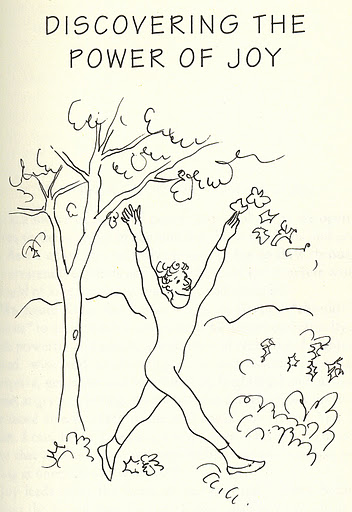
From Discovering the Power of Joy ~ #10 Allow Grief and Other Scary Feelings

From Tapping the Power of Your Mind ~ #30 Accept Yourself, Remembering and Forgetting.

From When You’re Sinking, Grab A Life Line ~ #56. Connect, Connect, Connect

Author Charlotte Kasl describer herself this way on her web site:
“I wear the hat of psychotherapist, author, and teacher, but at my core, I am a peace and social justice activist. I believe the starting place for healing the planet is in our hearts and in the ways we practice respect, empathy, understanding and equality in all human relationships, including our relationship to ourselves.” ~ Charlotte Kasl
Charlotte has written a number of books. One I have already read is called If the Buddha Married: Creating Enduring Relationships on A Spiritual Path. Her newest book that has yet to be released is called If the Buddha Had Kids: Raising Children to Create a More Peaceful World. It is one I will read once it is released.
Have you read any of Charlotte‘s books? If yes, do you recommend any?
Mojo Monday ~ The Letter That Needed To Be Written
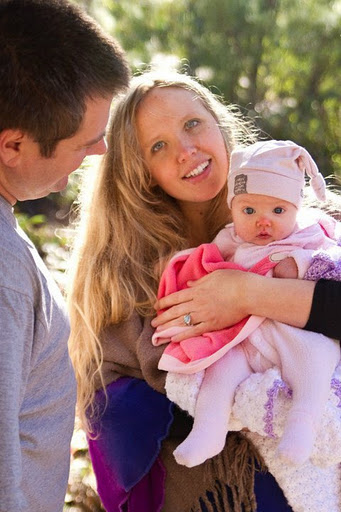 |
| Goddess Leonie with her beautiful daughter. |
This morning I read a powerful and honest account regarding pregnancy, birthing and post partum depression. It was written by Goddess Leonie and I applaud her bravery in sharing her personal experience. I believe that it will touch lives and comfort thousands of women who have felt alone or suffered in shame. You can find her story by clicking here: http://www.goddessguidebook.com/the-goddess-with-post-natal-depression/
I wrote Leonie a private heartfelt letter. It isn’t one I will share here. What I can share is that it struck a chord with me.
The Letter That Needed To Be Written.”

Today when I awoke my mind was already in the middle of composing a letter. I lay there in the dark listening as the words weaved their way through my mind and to my fingers. I went straight to a journal and began to write in long hand, the words flowing and pouring forth onto the pages. My letter was in regards to a very personal experience, the birth of my children. I am finally sending a letter I feel could have been sent much sooner. I won’t say “should have” because for whatever reason it must not have been time quite yet for me to write this letter. Perhaps this is the right time because I am feeling so much more open to messages from the greater universe and I find synchronicity glittering along this path I am traveling. I wanted to share my letter as I wrote it not just for myself but for all women. I write it for all women who have or will birth a child. Symbolically this letter can also be for anyone who births a painting, a book, a song, a dance…
I share to empower you to speak up when someone has not shown you or your birthing respect and consideration.

Dear Dr. Skipitis,
This letter has been residing in me for a long time. There was a point in time I thought of not writing one at all. Yet just this morning I awoke with the words flying through my head. I hadn’t even been thinking about this for quite a long time. Yet I suddenly felt compelled to write this letter, not just for myself, but for all women who will seek your care or will inadvertently find you are the physician on duty when they arrive to deliver their baby at Mercy Medical Center.
My intent in writing this letter is to share with you an experience I had almost three years ago. You played a role in the experience. I am hopeful that you will really hear me and give thought to the role you play and the impact you can have on the lives of the women you serve. You see I believe that doctors in your position serve in a beautiful way. You are there to help bring new life into this world. You are a witness to a human being’s arrival.
A little less than three years ago I arrived at the Mercy Medical Center with my husband to deliver, not just one baby, but two. I was expecting identical twin daughters. I was 36 weeks along when my water broke. The girls had been growing and developing beautifully according to the many ultrasounds. The estimates of their weights and sizes were right on track.
Early on in my pregnancy there had been a concern that the girls were monoamniotic. This was troubling when we read about the complications that could arise. Fortunately this was ruled out by an advanced ultrasound. We traveled to Sacramento several more times, as our doctor felt it was necessary, due to concerns about twin-to-twin transfusion. Again, fortunately we had no such problem.
Except for my own discomfort throughout the pregnancy, nausea that lasted for months and months, a persistent cough and the swelling, the girls appeared healthy and perfect in their safe first home. As we grew closer to the estimated delivery date the weekly monitoring of the girls heart rates began. I would lay uncomfortably propped up with pillows on a table, wires and monitors strapped to my belly. I couldn’t lay flat and being on my back, even though propped up, was quite uncomfortable. A few times during the monitoring I even experienced painful contractions. Yet this is what was required of me in order to ensure my daughters were healthy and thriving.
You were not my doctor so I had not shared any of this journey with you. It really is a journey. One that changes the contours and map of your body. It is also a journey that affects your mind, spirit and emotions profoundly. Your body is no longer your own. You are sharing it with another human being, in my case, two new human beings. My body was giving them life, feeding them and sustaining them.
While you were not my doctor and did not know me, you were the doctor on duty that night I arrived at the hospital. I learned later that my own doctor, Dr. Mooney, was attempting to celebrate an anniversary that same evening. He would eventually be disturbed with a phone call about me, his patient. He tried to assist from a distance the best he could that night.
When I arrived at the hospital that evening with my husband, bags in tow, I was beginning to feel the first tugs of the contractions. I had been feeling so completely calm ever since my water broke at home on the bathroom floor. I felt prepared. My bags were packed. I had drafted an email to family and friends already. All I had to do was hit send and load up the car.
The nursing staff was incredibly welcoming upon our arrival. I was quickly admitted and we were shown to our room. I changed into a hospital gown, leaving all sense of modesty at the door. The staff efficiently helped me into bed and began placing heart monitors on my belly and wheeled in a portable ultrasound machine.
The ultrasound showed that Baby A – our Maya – was head down and in position for delivery. Baby B – our Aubrey – had been head down for months, but just a few weeks back turned into a transverse position. This being a fairly recent change in positioning my doctor had not talked about what this might mean in regards to delivering.
It is about this point in the story, babies’ heart beats being monitored, me trying to find a more comfortable position, and the contractions beginning to intensify, that I received a phone call from you there in the room. You introduced yourself as the physician on duty and explained you would be delivering my children. The conversation we shared was rather brief so the next part of your message came out rather quickly. You said that you would be performing a c-section. I responded that we had wanted to deliver vaginally. You stated that a c-section was necessary. I asked why we couldn’t still consider a regular delivery. Instead of explaining or speaking to me as if I was an intelligent person you responded that this was the only way you’d deliver the babies. I said I needed to speak with my husband. You added at the end that if we didn’t agree then you’d have to have me removed from the hospital and flown by helicopter to a distant hospital.
I was holding the phone, lying in a bed in a hospital, in a hospital gown, contractions pulling at me more strongly, baby heart monitor beeping and I was calmly registering your statement that if I didn’t agree to a c-section with you that you would have me removed from the hospital.
There was some final statement from you about calling me back in a few minutes to find out our decision. The phone was hung up and I relayed your message to my husband. My husband felt a twinge of fear as he wondered if you really had the power to make such a decision. The idea of his wife being removed from the hospital while in labor with his children was rather terrifying. The staff in the room was listening and hearing what you had said too.
At that point in time the saving grace in this situation was the supportive and caring, truly caring, responses from the medical staff in my room and my husband. I could feel the women in that room circling around me protectively, offering me their strength and support. I was comforted with statements like “You aren’t going anywhere,” “This is your delivery,” and “You have choices.” Their statements were true and I knew it.
The mere idea that a doctor would threaten a patient in labor with twins that she could be removed from the hospital seemed ridiculous. It felt like a scare tactic to get me to do what you wanted, with no discussion or questioning of your opinion. It made me think of the old cliché “My way or the highway.” If I didn’t acquiesce immediately to your orders I needed to hit the road.
I am an intelligent and reasonable person. I needed you to explain to me and I needed you to converse with me. I didn’t need to be ordered around or spoken at.In light of what you had told me the staff made phone calls to other doctors. We awaited another doctor’s call or arrival. In the meantime the babies were still being monitored and my contractions were growing more intense and painful.
When you called back I was focused on what was happening with my body and the babies so my husband took your call. You asked what we had decided. My husband responded that we were waiting to hear from another doctor. You sounded angry on the other end of the phone and asked who was this other doctor that was being called. My husband replied that he didn’t need to tell you that. You again sounded quite angry over the phone and stated that you wouldn’t be our doctor and would not be delivering our babies. My husband told you that he thought that had already been decided.
Not too long after that phone call from you Dr. Pena arrived to speak with us. He was kind, gentle and reasonable. He performed another ultrasound himself to check the babies’positions. I asked him why we couldn’t try for a regular delivery since Maya was head down. I suggested maybe Aubrey would then have room to turn around. Dr. Pena explained he had not heard of that happening in all his years of delivering. He calmly explained the risks. He said that if Maya was the smaller baby and she came out first we ran a risk of trying to deliver Aubrey breech and the vaginal opening not being big enough for her head to come through last. The danger was lack of oxygen and rushing to perform an emergency c-section to save her. He explained all this and shared that he was not comfortable with such a delivery, but there was no ultimatum or orders. He simply said he would give us time to ourselves to talk about it and make our decision.
Upon his departure we had our discussion. While I had hoped for an old fashioned delivery I knew that I had not carried these two beautiful and healthy girls all these months to risk something happening to one of them. We did not want to risk their safety and so we had a nurse let Dr. Pena know we would go forward with the c-section.
The exchange we shared with Dr. Pena is how I felt it should have been from the very beginning. Speak to me reasonably. Don’t just toss out orders. Especially when it comes to something so amazingly intense and personal as the birthing of ones’ children.
The story of course continues without you. Dr. Pena delivered our girls and they were healthy and beautiful. There was a complication with my recovery as I hemorrhaged and a code blue was called. There was a bit of excitement as the hospital staff worked on me to stop the bleeding and save my life. In the end I was okay and I began my recovery. In a few days we went home with our daughters and began the journey of being parents and caretakers.
Family and friends asked us about the delivery. Some of our contacts were with people in the local medical community. When they heard the story of what had been told to us about being removed from the hospital they asked who it was that said such a thing. We told them.
I am insightful and I am willing to consider that anyone can have a bad day or an off night. At one point I wondered if you were having a bad day. I was willing to make an excuse for your treatment of us. I was willing to consider that maybe this was very out of the ordinary for you. Yet, there were several people who heard the story and who either knew you or knew of you, and they gave a knowing smile and a nod of the head. This story did not appear to surprise them.
I trust that you are a good doctor. Perhaps you are even exceptional. I am sure that you have had patients who have liked you and found you to care for them in all the right ways. I have seen you on television in support of public television. In fact that was the first time I ever “saw” you. Seeing that made me think that you must be a thoughtful and caring man. I noticed at the local Kids Kingdom playground your name on a plaque as a donor. It made me think that you must also be a generous person who gives to the community and cares for children and families. I don’t think you are a horrible person from my one experience with you.
What I do still wonder though is how many patients have you treated and spoken to the way you did me that night. How many women have been scared by the threat of being removed from the hospital by you? Perhaps I am the only one. It seems doubtful, but maybe that is the case. Yet if that is the case, what made my particular situation the one where you would say such a thing?
I don’t expect or even want a response from you. You may choose to crumple up this letter and throw it away. Yet I write with the hope that you will stop, listen and really be able to see through a woman’s eyes what it was like to interact with you on a momentous occasion in her life, a night like no other. I write with the hope that you will never speak to another patient the way you spoke to me that night. The women you serve as a doctor deserve more respect and consideration than I was shown that night. I hope that will always be the case for the women you serve in the future.
Sincerely,
Michelle
P.S. I am sharing this letter with my previous physician Dr. Richard Mooney, my delivering physician Dr. Pena and with President/CEO Rick Barnett with Mercy Hospital. I believe it is also important for them to hear this story in hopes that they too will be reminded of the very important role you all play in caring for a patient and providing him or her with respect and understanding, in addition to the best medical care you know how to provide.
Cc: Dr. Richard Mooney
Dr. Jorge Pena
President/CEO Rick Barnett
Mojo Monday ~ The Invitation


what you do for a living.
I want to know
what you ache for
and if you dare to dream
of meeting your heart’s longing.
how old you are.
I want to know
if you will risk
looking like a fool
for love
for your dream
for the adventure of being alive.
what planets are
squaring your moon…
I want to know
if you have touched
the centre of your own sorrow
if you have been opened
by life’s betrayals
or have become shriveled and closed
from fear of further pain.
if you can sit with pain
mine or your own
without moving to hide it
or fade it
or fix it.
if you can be with joy
mine or your own
if you can dance with wildness
and let the ecstasy fill you
to the tips of your fingers and toes
without cautioning us
to be careful
to be realistic
to remember the limitations
of being human.
if the story you are telling me
is true.
I want to know if you can
disappoint another
to be true to yourself.
If you can bear
the accusation of betrayal
and not betray your own soul.
If you can be faithless
and therefore trustworthy.
even when it is not pretty
every day.
And if you can source your own life
from its presence.
if you can live with failure
yours and mine
and still stand at the edge of the lake
and shout to the silver of the full moon,
“Yes.”
to know where you live
or how much money you have.
I want to know if you can get up
after the night of grief and despair
weary and bruised to the bone
and do what needs to be done
to feed the children.
who you know
or how you came to be here.
I want to know if you will stand
in the centre of the fire
with me
and not shrink back.
where or what or with whom
you have studied.
I want to know
what sustains you
from the inside
when all else falls away.
if you can be alone
with yourself
and if you truly like
the company you keep
in the empty moments.
from the book The Invitation
published by HarperONE, San Francisco,
1999 All rights reserved
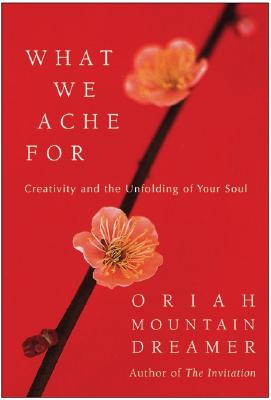
Here is an excerpt from What We Ache For:
“I experience the greatest resistance to writing when I am beginning a particular piece, writing a new poem or short story or starting a new book. As the day and time I have set aside to begin approaches, I feel a strange but familiar dread, a slight tension in my chest, a barely perceptible agitation in my arms and legs. If I sit with this sense of uneasiness, I discover a wide range of not particularly unique or fascinating fears: the fear that I have nothing wrothwhile to say; the fear that this time I will not be able to find the end of the thread that will take me into an effortless flow of words; the fear that the writing will simply be bad–unclear, uninspired, awkward, tedious. But beneath all these is the fear that the creative process will affect me in some unpredictable way, requiring changes in my life that will be at best uncomfortable and at worst truly risky. This latter fear is probably the strongest, and it has a basis in experience. Creative work, because it cannot be separated from our spirituality, inevitably connects us to that which is larger than us, and experiencing the sacred center of life can create a shift in perspective, can bring new insights and understandings that demand something of us.”
Here is an excerpt from The Dance:

How would this change what you choose to do with your life?
What if you could be more present and openhearted with each person you met if you were working as a cashier in a corner stone, or as a parking lot attendant, than you could if you were doing a job you think is more important?
How would this change how you want to spend your precious time on this earth?
What if your contribution to the world and the fulfillment of your own happiness is not dependent upon discovering a better method of prayer or technique of meditation, not dependent upon reading the right book or attending the right seminar, but upon really seeing and deeply appreciating yourself and the world as they are right now?
How would this affect your search for spiritual development?
What if there is no need to change, no need to try to transform yourself into someone who is more compassionate, more present, more loving or wise?
How would this affect all the places in your life where you are endlessly trying to be better?
What if the task is simple to unfold, to become who you are already are in your essential nature–gentle, compassionate, and capable of living fully and passionately present?
How would this affect how you feel when you wake up in the morning?
What if who you essentially are right now is all that you are ever going to be?
How would this affect how you feel about your future?
What if the essence of who you are and always have been is enough?
How would this affect how you see and feel about your past?
What if the question is not why am I so infrequently the person I really want to be, but why do I infrequently want to be the person I really am?
How would this change what you think you have to learn?
What if becoming who and what we truly are happens not through striving and trying but by recognizing and receiving the people and places and practices that offer us the warmth of encouragement we need to unfold?
How would this shape the choices you make about how to spend today?
What if you knew that the impulse to move in a way that creates beauty in the world will arise from deep within and guide you every time you simply pay attention and wait?
How would this shape your stillness, your movement, your willingness to follow this impulse, to just let go and dance?
 “And enjoy this last piece of wisdom from Oriah
The Chocolate Cabinet by Geneen Roth

A mother of an 8-year-old was desperate. “My daughter is gaining weight by the second,” she told me. “I am so afraid that I have passed on my troubles with food to her, and I don’t know whether to remove all candy from the house, take her to a doctor, or put her on a strict diet. Help!”
“What is your daughter’s favorite food?” I asked.
“Chocolate,” she said.
“Does high cholesterol, high blood pressure, or diabetes run in your family?”
“No,” she said.
“Is your daughter’s health good?”
“Yes.”
Desperation calls for radical measures, so I said, “On your way home, stop at the store and buy enough chocolate to fill an entire kitchen cabinet. In your kitchen, designate one cabinet The Chocolate Cabinet and fill it to overflowing with the chocolate you bought. Now, tell your daughter that this is hers and hers alone. Tell her that she can eat as much of it as she wants and that you will fill it back up when the cabinet gets even a tiny bit empty. Do not criticize her. Do not watch her with hawk eyes. And make sure that cabinet is brimming with chocolate. Wait three weeks, and then let me know what happens.”
She looked at me in disbelief. “Have you lost your mind? If I give Gracie free rein over chocolate, she will devour every single piece before I can get to the store and buy more. She will gain a million pounds. I will create a monster!”
“Try it,” I said. “Let’s see what happens.”
Fast-forward three weeks. The desperate mother says, “When I first told Gracie about the new plan, she didn’t believe me. She waited until I left the kitchen, and then she plowed through the contents of her cabinet before I could change my mind. I filled up that cabinet four times that first week (with gritted teeth, I admit). But when Gracie realized I was not going to criticize her and that I was absolutely serious about letting her have as much as she wanted, she ate less and less. By the second week, I only had to buy a little chocolate, and by the third week, none at all. She is more relaxed around food. She is losing weight. I am a chocolate-cabinet convert!”
Does this story (it’s true, by the way) make you excited? Slightly hysterical? Have you come up with 25 reasons why this wouldn’t work at your house? You are not alone.
However, while some of your reasons may be based on fact, most of them are about your own relationship to food and hunger and abundance, not your children’s. And here’s the litmus test: Ask yourself what would happen if you filled one cabinet with food you wanted but believed you’re not supposed to have. What would happen if you let yourself eat it without criticizing yourself? I can’t swear to this, but I bet you have (at least) 25 reasons why that wouldn’t work.
It’s not about the food. Although the chocolate-cabinet idea was radical, I was almost positive that what Gracie wanted wasn’t candy. She wanted her mother’s (positive) attention. She wanted her mother to trust her. But mostly, she wanted to believe in and trust herself, and only way she could do that was by first learning those skills from her mother. The drama around food and weight gain was the language that Gracie was using to communicate with her mother. The real issue is never the food.
My mother was a fat kid whose own mother took her shopping in the Chubby section of Macy’s. Growing up, my mother felt self-conscious, ashamed of her body around boys, clothes, socializing. Because she loved me and didn’t want me to suffer the way she had, when I was a kid she began watching what I ate, restricting certain foods from my diet, telling me I was getting fat.

How did the hawk-eye, restrictive approach work?
Not so well. In response, I began hiding frozen Milky Ways in my pajama pants, sprinting past my parents’ room and sitting over the trash can in my room eating the candy bars as fast as I could, ready to spit them out if my mother opened the door and caught me. I began feeling as if I needed to look a certain way for her to love me, eat certain foods for her to approve of me. And so I began living (and eating) a double life: When I was in front of her, I’d eat cottage cheese and chicken without skin. When I was out of her sight, I’d stuff myself with everything I wasn’t allowed to eat in her presence. Food became the language of our relationship. And although, as my brother often points out, I’ve made a career from the dysfunction that resulted, I would not recommend this path to anyone.
I tell them, “Attend to your own relationship with food first.” Be honest with yourself about what you actually believe. Do you believe you can’t trust your hunger? That if you really let yourself eat what you want, you’d start at one end of your kitchen and chomp your way across the country? Do you believe there is an abundance of what you need, want, love?
After you begin exploring your own relationship with food, be mindful about what you communicate to your children. Deprivation, force, and shame do not ever, under any circumstances, lead to positive change. If you judge your children, if you create a moral standard about body size, if you withhold approval based on what they weigh, nothing good will come of it. They will begin judging their bodies, hiding their food, and defining their worth by what they weigh.
And ask yourself this question: If you could fill a cabinet with anything — food, attention, time — what would it be? Chances are, it won’t be chocolate. Commit to being lavish with yourself with what you really need. As you do that, you will become a living example of self-care and trust and love. You will be who you want your children to become. Believe me, they’ll notice.

Geneen Roth has authored many books:
Lost and Found: Unexpected Revelations About Food and Money
Women Food and God: An Unexpected Path to Almost Everything
When Food Is Love
The Craggy Hole in My Heart and the Cat Who Fixed It
Breaking Free from Emotional Eating
Feeding the Hungry Heart
When You Eat at the Refrigerator, Pull Up a Chair
Appetites — On the Search for True Nourishment
Why Weight? A Guide to Ending Compulsive Eating
Mojo Monday ~ The Dressing Room Project

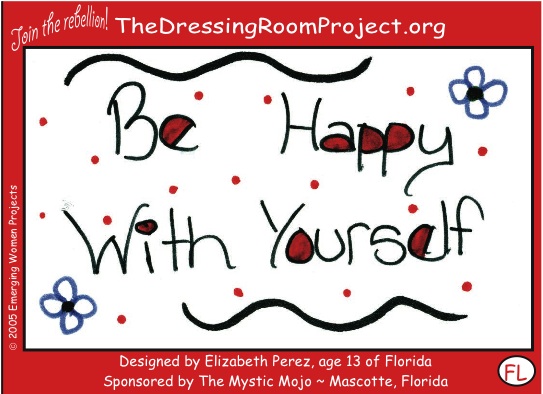
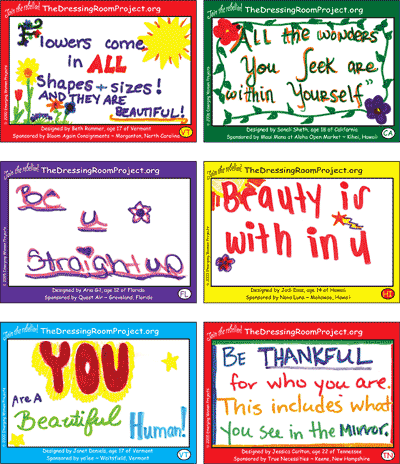


What does it say?
Thriving In Spite of Adversity

The most recent article I wrote for my column called We Are All Meant to Shine! in Cosmic Cowgirls Magazine is called Thriving In Spite of Adversity.
This particular article is about former foster youths Ashley Rhodes-Courter and Derek Clark. Both of them are such an inspiration. They are modeling for all of us, that even if difficult, challenging or tragic events occur in our lives, we don’t have to define our lives by those events. We get to choose the direction of our lives, based on the present, not on the past and we get to choose how we respond to what life throws in our direction.
Come read more by clicking here.
Mojo Monday ~ A Friendship Quiz

You don’t actually have to take the quiz. Just read straight through, and you’ll get the point.
1) Name the five wealthiest people in the world.
2) Name the top five news stories five years ago.
3) Name ten presidents or leaders of the biggest countries in the world.
4) Name ten people who have won the Nobel or Pulitzer Prize.
5) Name the last half dozen Academy Award winners for best actor or actress.
6) Name the last decade’s worth of World Series winners.
How did you do? The point is, none of us remember the headliners of yesterday. These are no second-rate achievers. They are the best in their fields. But the applause dies. Awards tarnish. Achievements are forgotten. Accolades and certificates are buried with their owners.
Here’s another quiz. See how you do on this one:
1) List a few teachers who aided your journey through school.
2) Name three friends who have helped you through a difficult time.
3) Name five people who have taught you something worthwhile.
4) Think of a few people who have made you feel, appreciated and special.
5) Think of five people you enjoy spending time with.
6) Name half a dozen heroes whose stories have inspired you.
Easier? The people who make a difference in your life are not the most powerful ones, nor have the most money or awards. They are the ones that care.
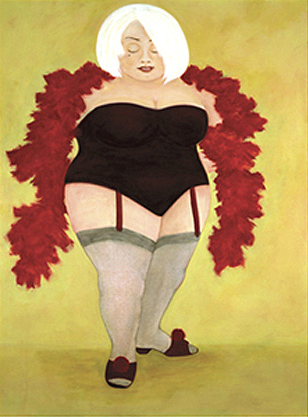
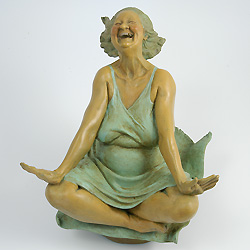
Mojo Monday ~ VoluptuArt

 |
| Red Boa |
 This image is called Red Boa. The book mark has the following quote:
 |
| Flamenco |

 |
| Wind |
 |
| Gladys |
 Another treasure that I enjoyed discovering is this petite earring Goddess holder shown to the left.
Mojo Monday ~ Gerda Lerner


Here is how Gerda describes some of her early years in her own writing:
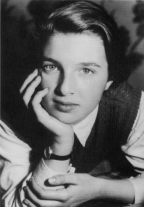
 “At this time, when I look back on my life and my work, I see patterns and connections that were not so clearly visible at an earlier stage of my life. The impact of outside political and social events that I experienced in childhood and as a teenager shaped my connection to history: I was a victim of terror and persecution; my life was deeply affected by historical events. As a witness to terrible events, I early learned that history matters. On the other side, a childhood in which artistic creativity and expression were cherished and in which learning was considered not only a practical means of career building, but a means of finding equilibrium and meaning in life well equipped me for survival as a refuge. The life of learning and thinking would always be connected for me with teaching others and with finding a way of applying what I knew to the problems in society.”
“In the Fall of ’63 I entered Columbia University. I was forty-three years old; my daughter was in college and my son was in high-school. My husband was busy with a successful career as a film-maker and teacher of film. I had shopped around before selecting a graduate school in order to be allowed to do a biography of the Grimke sisters, the only Southern women to become agents and lecturers of the American Anti-Slavery Society, as my dissertation. Columbia was the only place where the department chairman was willing to bend the institutional regulations so as to meet my needs. The topic, on which I had already been working for four years, was approved for my dissertation, even before I had fulfilled my orals requirements. Due to this flexibility, I was able to earn both the M.A. and Ph.D. degrees in three years from the time I entered, while also teaching part-time at the New School and for the final year at Long Island University in Brooklyn.”

“During the interview at Columbia prior to my admission to the Ph.D. program, I was asked a standard question: Why did I take up the study of history? Without hesitation, I replied that I wanted to put women into history. No, I corrected myself, not put them into history, because they are already in it. I want to complete the work begun by Mary Beard. This announcement was, not surprisingly, greeted by astonishment. Just what did I have in mind? And anyway, what was Women’s History? The question set me off into a lengthy explanation, on which I have played variations for the past forty years. I ended in somewhat utopian fashion: ‘I want Women’s History to be legitimate, to be part of every curriculum on every level, and I want people to be able to take Ph.D.s in the subject and not have to say they are doing something else.”
Lastly here are some of Gerda’s thoughts on the importance of recognizing women in history:

“In U.S. historiography, as in American popular culture, historians have tended to over-emphasize the role of the individual in history. Great men are identified as founders and leaders; they become the virtual representatives of the movement: William Lloyd Garrison for abolition, Eugene Debs for the socialist movement, Martin Luther King Jr. for the civil rights movement. In fact, no mass movement of any significance is carried forward by and dependent upon on leader, or one symbol. There are always leaders of subgroups, of local and regional organizations, competing leaders representing differing viewpoints, an, of course, the ground troops of anonymous activists. And, as can be shown in each of the above cases, emphasis on the ‘great man’ omits women, minorities, many of the actual agents of social change. In so doing it gives a partial, an erroneous picture of how social change was actually achieved in the past and thereby fosters apathy and confusion about how social change can be made in the present.”
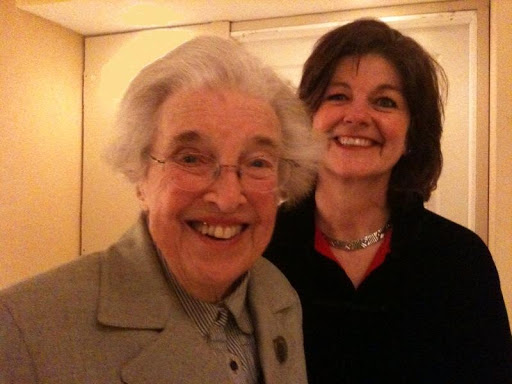 |
| Dr. Gerda Lerner on her 90th Birthday (April 2010) |

Some of Gerda Lerner’s Professional Accomplishments:
Musical
- Singing of Women (1951, with Eve Merriam)
Screenplays
- Prayer Pilgrimage for Freedom (1957)
- Black Like Me (1964)
- Home for Easter (n.d.)
Books
- No Farewell (1955) an autobiographical novel
- The Grimké Sisters from South Carolina: Rebels against Authority (1967)
- The Woman in American History [ed.] (1971)
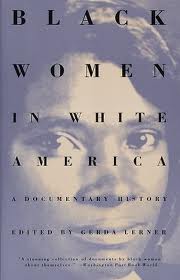
- Black Women in White America: A Documentary History (1972)
- The Female Experience: An American Documentary (1976)
- A Death of One’s Own (1978/2006)
- The Majority Finds Its Past: Placing Women in History (1979)
- Teaching Women’s History (1981)
- Women’s Diaries of the Westward Journey (1982)
- The Creation of Patriarchy (1986)
- Why History Matters (1997)
- The Creation of Feminist Consciousness (1993)
- Scholarship in Women’s History Rediscovered & New (1994)
- Fireweed: A Political Autobiography (2003)

Here is a video of Gerda Lerner, PhD being interviewed:
 We Are All Meant to Shine!
